

To learn how to apply jobs with ai effectively in 2026, candidates must deploy a structured three-tier workflow: using AI job platforms for targeted discovery, algorithmic optimizers for ATS keyword alignment, and browser copilots for 1-click form autofill—while retaining strict human-in-the-loop review to prevent bot detection and account penalties.
Applying manually to 50 corporate openings takes roughly 30 hours of tedious data entry. Modern AI application systems reduce that investment to under 3 hours while dramatically raising your recruiter response rate.
Quick Verdict: The Optimal AI Application Stack
For 90% of job seekers, the safest and highest-converting strategy is a supervised copilot approach rather than unmonitored mass-apply bots. Use an intelligent workflow assistant like Teal to organize bookmarks and autofill applications with 1 click, combined with Jobscan for ATS keyword auditing. Fully autonomous bots like LazyApply or Sonara should only be used with conservative daily limits to avoid platform security flags.
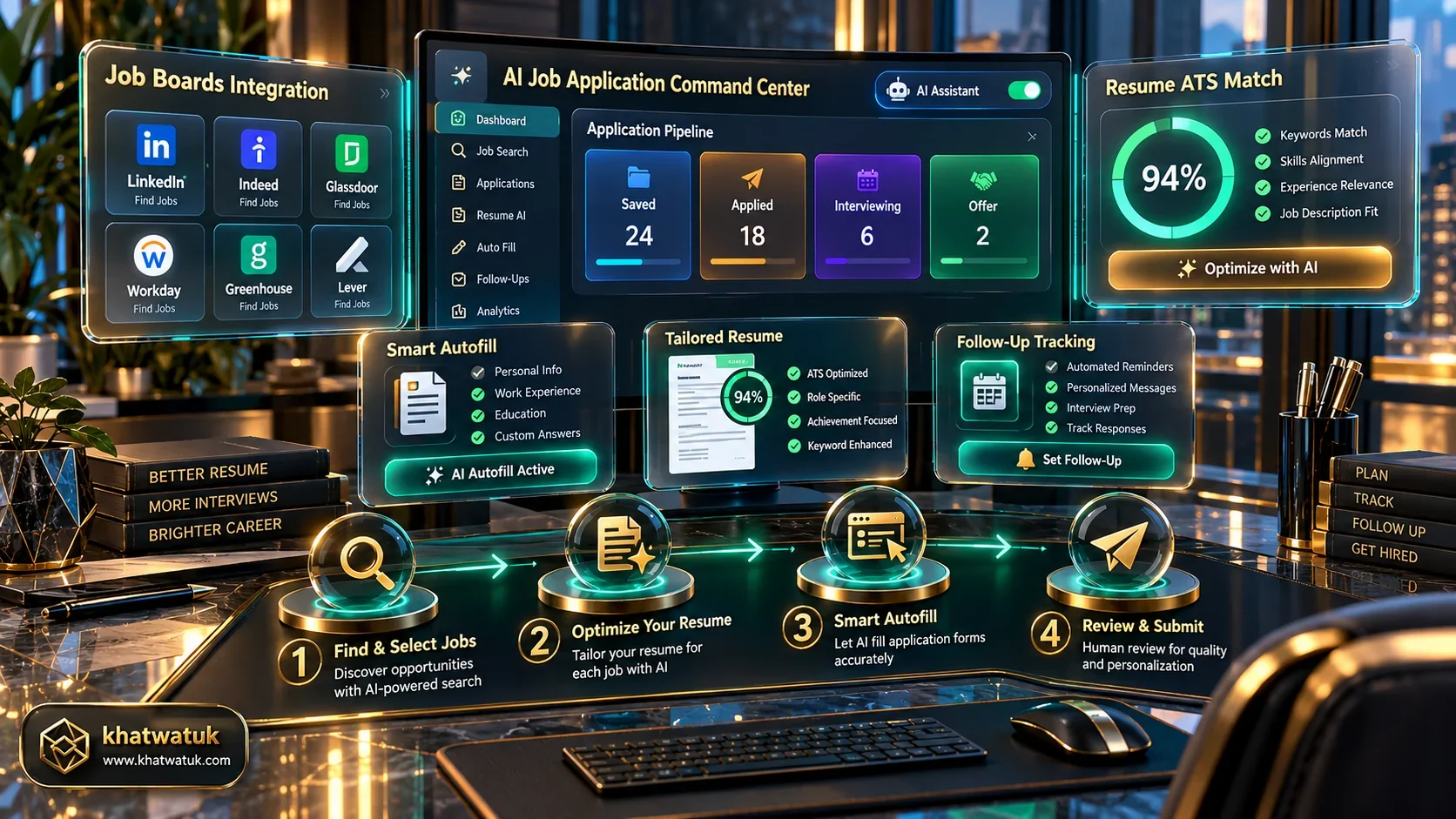
The 2026 AI Job Application Landscape: Speed vs. Quality
The modern employment market has transformed into a high-speed technological chess match between candidate automation and corporate recruiter screening filters. Understanding this dynamic is crucial before deploying automated software.
Talent acquisition teams at Fortune 500 enterprises receive over 250 submissions per open requisition within 48 hours of posting. Over half of these submissions are produced by automated bots that fail basic qualification thresholds.
The Death of the 45-Minute Manual Application
Manually typing your contact details, employment history, and university credentials into repetitive Workday or Greenhouse portals is an exhausting waste of human creative energy. It leads to applicant burnout and rushed, error-prone cover letters.
Modern browser extensions and AI career copilots solve this mechanical bottleneck. They parse open form fields instantly, allowing job seekers to spend their valuable energy on strategic interview preparation and high-impact portfolio refinement.
Why 1,000-Bot Blasts Fail ATS Screeners
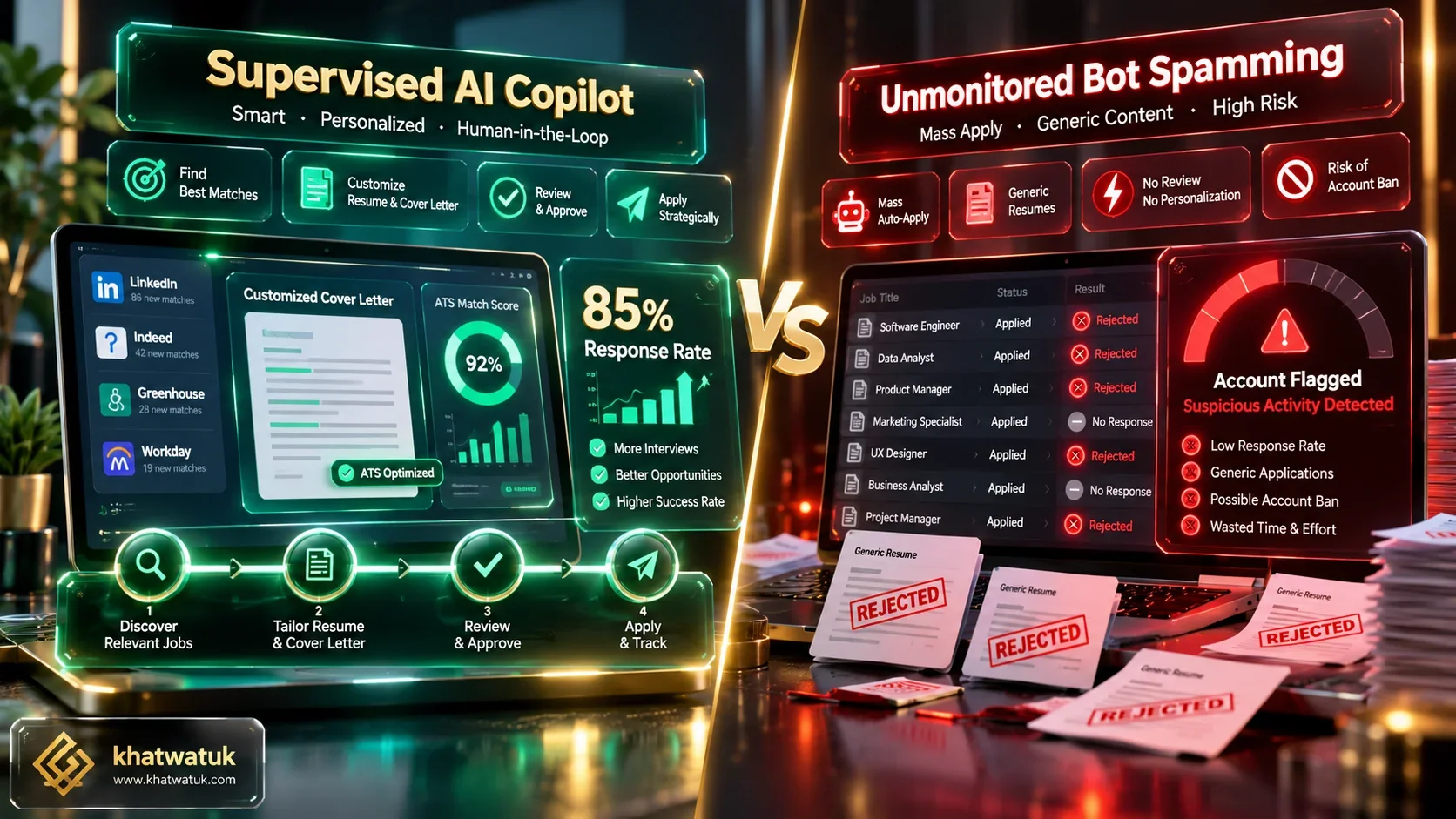
Conversely, relying on unmonitored mass-apply bots that spam 1,000 generic applications across job boards creates severe unintended consequences. Corporate Applicant Tracking Systems now deploy velocity traps and honeypot questions that flag instant bot submissions.
When an enterprise ATS detects an unedited generic resume with 40% keyword relevance, the candidate profile is silently archived into talent pools without human review. Strategic precision always outperforms indiscriminate volume.
The 3-Tier Framework: How to Apply for Jobs with AI Safely
To achieve maximum submission efficiency while maintaining flawless recruiter presentation, top candidates adhere to the battle-tested three-tier framework outlined below.
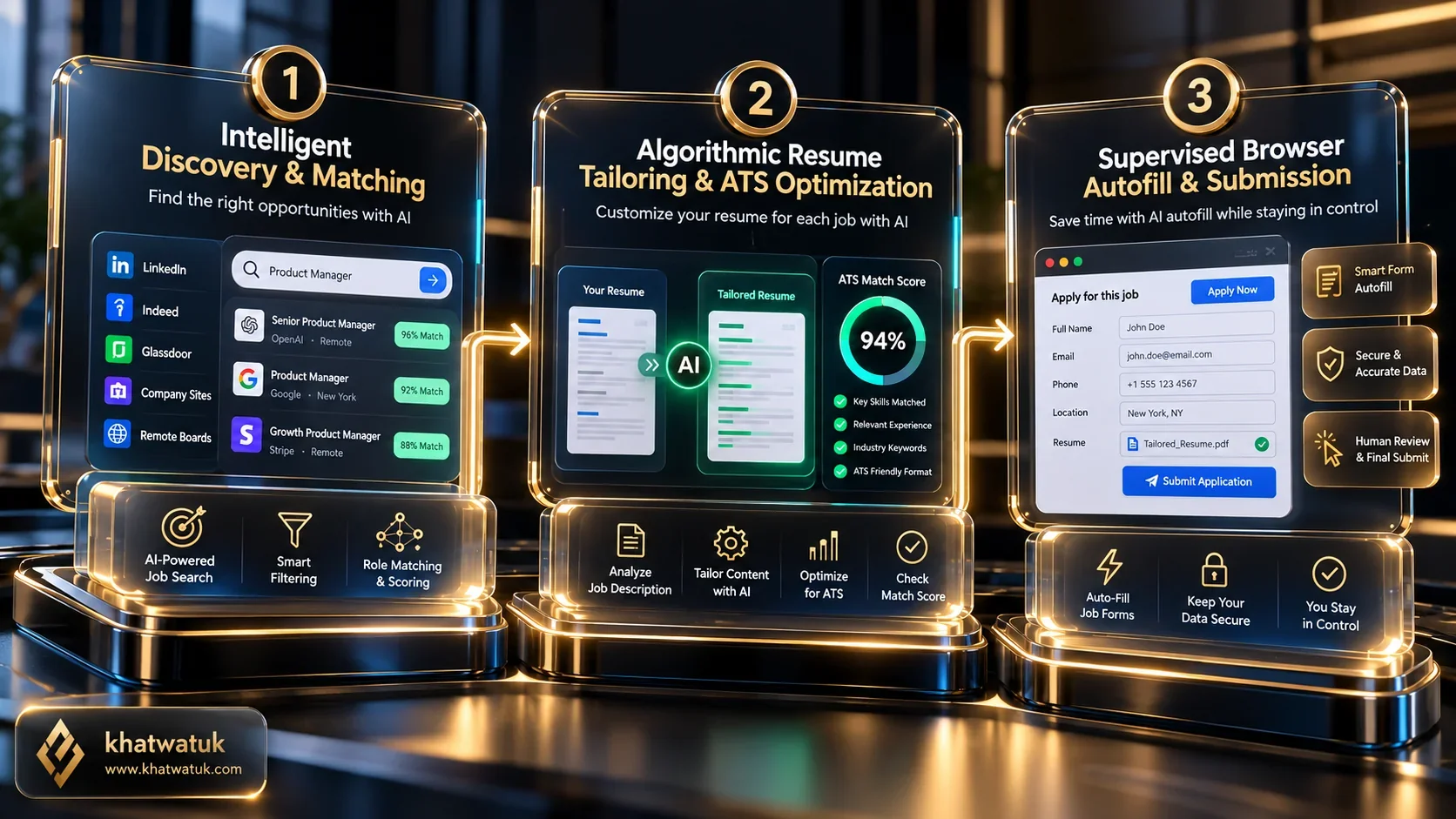
Phase 1: Smart Job Discovery and Match Scoring
Rather than scrolling endlessly through cluttered generic job boards, use AI job search platforms to aggregate verified openings that match your exact seniority and compensation expectations.
Algorithmic scrapers index unlisted career portals and direct company Greenhouse boards, filtering out stale postings that have remained unfilled for over 30 days to protect your pipeline momentum.
Phase 2: Contextual Resume and Cover Letter Tailoring
Once target positions are identified, never send an identical master resume. Compare your qualifications against target requisitions using proven platforms reviewed in our comprehensive guide on best AI resume builder tools.
Extract mandatory hard skills, software competencies, and industry terminology, integrating them organically into your achievement bullet points without inventing unverified credentials or hallucinating past job titles.
Phase 3: Supervised Browser Autofill Across Enterprise Portals
The final phase executes form completion using browser copilot extensions. The AI maps your verified candidate profile into complex portal inputs across Workday, Lever, and Taleo in roughly 5 seconds.
You retain 100% human oversight: a quick 30-second visual scan verifies compensation numbers, citizenship status, and attached portfolio links before clicking the final submission confirmation.
Top 5 AI Tools to Apply for Jobs Compared
We conducted extensive testing across top recruitment platforms to determine how each application tool balances submission velocity, ATS safety, and candidate control. Here is how the market leaders perform head-to-head:
Selecting the ideal software depends on your career level and tolerance for automation risk:
- Choose Teal if you want an intuitive Chrome extension that organizes applications into a Kanban pipeline while accelerating form completion with zero risk of LinkedIn account penalties. Learn more in our head-to-head analysis of Teal vs Rezi.
- Choose LazyApply if your strategy centers on high-volume numbers across entry-level openings and you are comfortable setting daily limits to manage bot detection thresholds.
- Choose LoopCV if you want continuous automated background loops that test multiple resume variations to discover which wording converts best.
- Choose Sonara if you are an employed professional who wants an autonomous AI agent handling complex career portal questionnaires on your behalf.
- Choose Jobscan if your primary objective is securing an 80%+ match rate on enterprise systems before applying. Review our comparison of Jobscan vs Teal for workflow guidance.
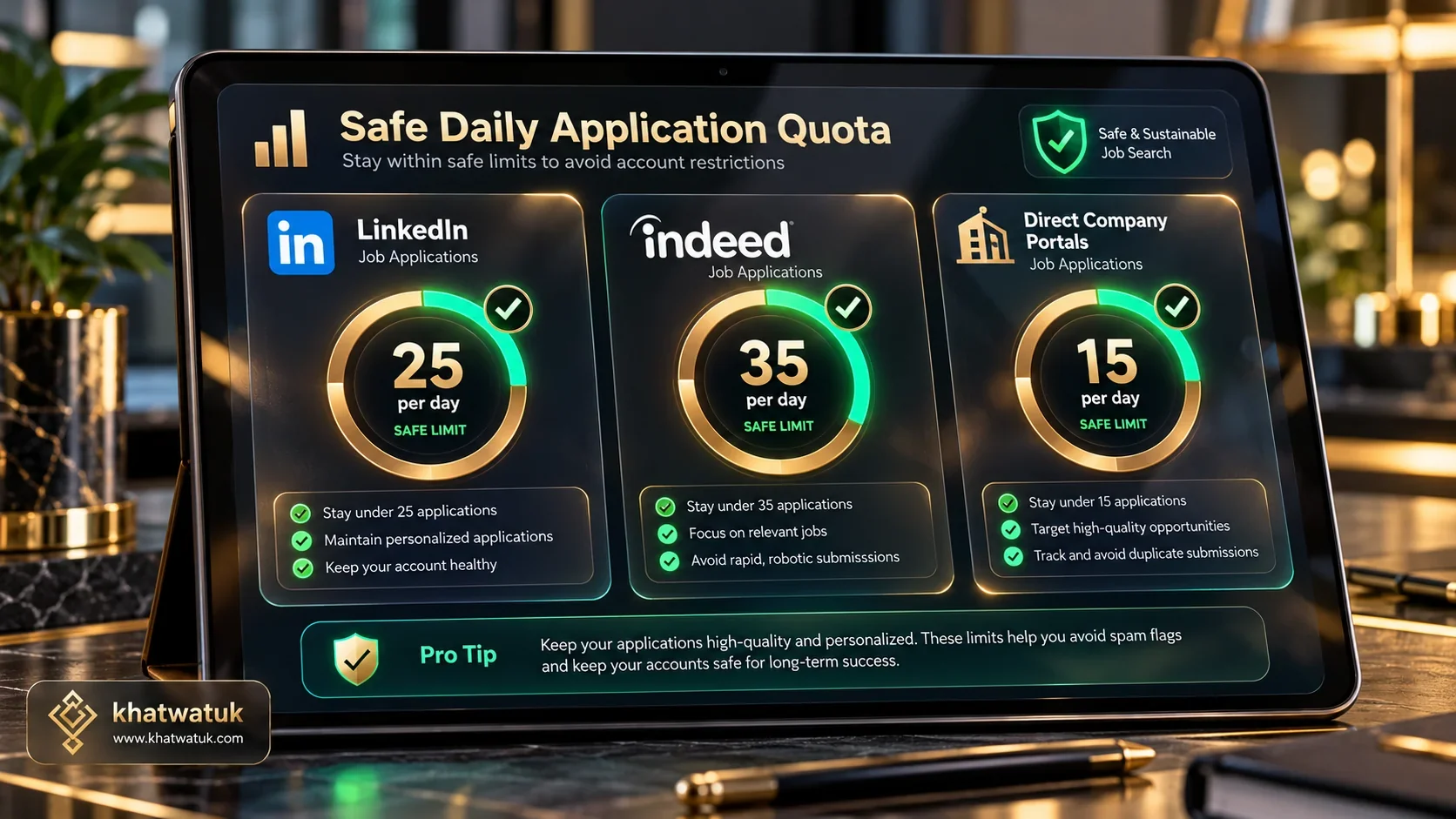
Safe Daily Submission Limits: Avoiding Account Bans
Job boards and hiring portals deploy strict heuristic rate-limits to protect their databases from automated web scrapers. Exceeding these limits can result in temporary suspensions or permanent account bans.
To ensure your candidate profile remains in good standing across enterprise career platforms, adhere strictly to the daily submission thresholds established by talent operations teams:
Handling Workday and Greenhouse Custom Questionnaires
Enterprise application portals frequently embed complex qualification questions regarding salary expectations, willingness to relocate, and legal work sponsorship.
Configuring a centralized profile in a verified copilot ensures your target salary range and visa status are entered consistently, eliminating embarrassing disqualifications caused by algorithmic confusion.
Edge Cases and Costly Mistakes to Avoid
The most common mistake candidates make when adopting AI job application tools is submitting unverified text containing model hallucinations or default bracketed placeholders like [Insert Company Name].
Recruiters immediately reject applications containing generic conversational artifacts such as 'As an AI language model, I possess strong leadership.' Maintain rigorous 30-second manual oversight on every single submission.
Step-by-Step Tutorial: Submitting Your First AI-Assisted Application
Ready to accelerate your hiring pipeline without sacrificing professionalism? Follow this repeatable 15-minute operational workflow for every application you pursue:
1. Ingesting Job Descriptions into Your Keyword Engine
Copy the full job description into an optimization scanner. Identify core software stacks, methodology requirements, and required certifications that corporate ATS filters will score.
2. Validating Match Scores Above 80%
Refine your resume bullets using generative AI prompts to incorporate identified keywords naturally. Ensure your match percentage surpasses the 80% threshold before proceeding to application forms.
3. Reviewing Form Fields Before Final Submission
Trigger your browser copilot autofill extension on the career portal. Review populated contact details, diversity questionnaires, and attached documents before clicking submit. Log the submission in your pipeline CRM.
Frequently Asked Questions (FAQ)
Here are direct answers to the most common questions regarding AI job application workflows and safety:
Can employers detect when you apply for jobs with AI?
Employers cannot detect AI browser autofill extensions because they populate standard web inputs just like a human applicant. However, recruiters can detect unedited AI-written cover letters containing formulaic phrasing or generic resume summaries that lack quantifiable achievements.
Does LinkedIn ban accounts for using AI job application extensions?
LinkedIn actively monitors automated browsing activity and enforces hourly rate limits. Using supervised autofill extensions like Teal is completely compliant, but running unmonitored scraping bots that exceed 50 applications daily can trigger CAPTCHA challenges or temporary account restrictions.
What is the safest tool to apply for jobs with AI in 2026?
The safest tool stack pairs Teal for browser copilot form autofill and pipeline organization with Jobscan for ATS keyword match auditing. Both tools keep the candidate firmly in control, ensuring zero risk of platform security flags or bot disqualifications.
How many jobs should I apply to per day with AI?
The optimal daily target is 15 to 25 highly tailored applications across corporate portals and LinkedIn. Submitting more than 50 applications daily triggers diminishing returns, as quality degrades and automated velocity filters flag your profile.
Can AI write my cover letter and answer custom screening questions?
Yes, modern AI career assistants can draft compelling cover letters and draft answers to complex screening questions. However, candidates must always review the output to verify factual accuracy and ensure salary expectations align with personal goals.
Is an automated application bot better than a manual application?
A supervised AI copilot workflow is vastly superior to pure manual applications and unmonitored bots. It delivers 90% of the speed benefits of full automation while guaranteeing that every submitted application is tailored and verified.
How do Applicant Tracking Systems (ATS) handle AI-generated resumes?
ATS platforms do not reject resumes simply because AI helped write them; they evaluate document structure and keyword relevance. As long as your resume is formatted cleanly and matches required skills, it will achieve a high parsing score.
What is the biggest mistake candidates make when applying with AI?
The single biggest mistake is trusting unreviewed output blindly. Failing to catch bracketed placeholders, inaccurate years of experience, or repetitive AI phrasing will lead to immediate rejection by human recruiters during secondary review.
