

If you have applied for corporate roles lately, you already know the brutal reality: sending a generic resume into an Applicant Tracking System (ATS) is practically a guaranteed rejection. According to established resume guidelines from Harvard University Career Services, formatting clarity and targeted keyword alignment are decisive factors in passing initial automated screens. Today's job search demands surgical keyword matching, tailored bullet points, and relentless organization.
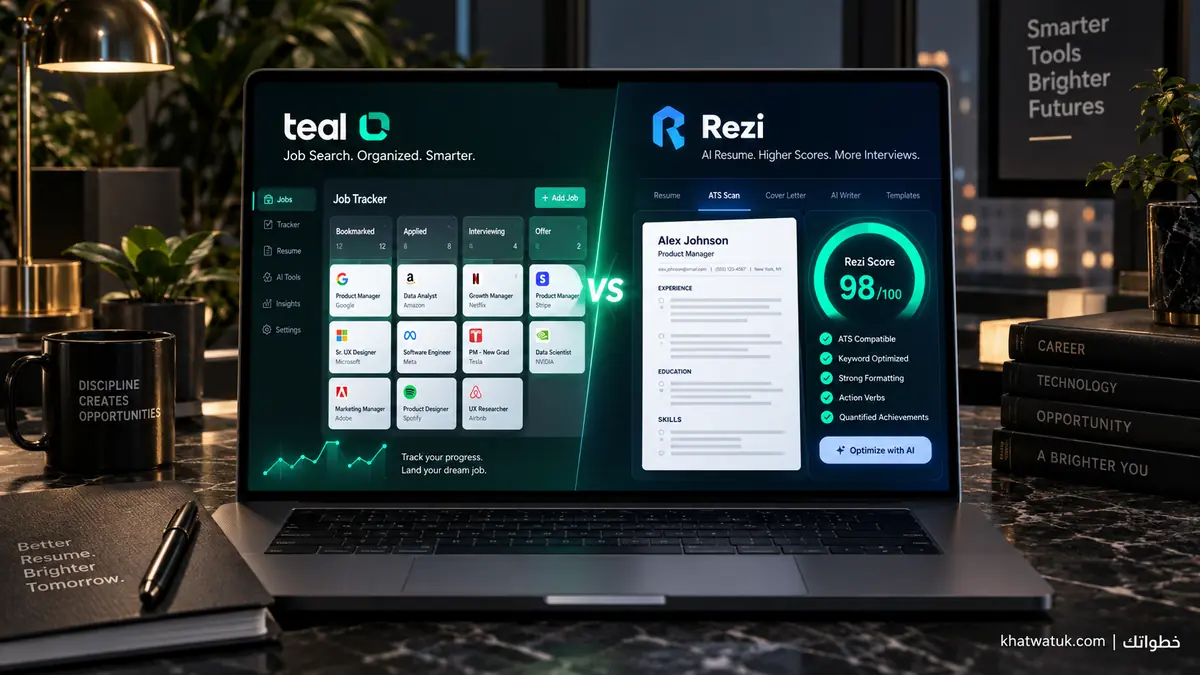
Two tools dominate current discussions among job seekers: Teal and Rezi. While both leverage artificial intelligence to overhaul your resume, they approach the job hunt from fundamentally different angles. Think of it this way: Rezi is a content engine built to beat ATS algorithms, while Teal is a career operating system built to run your entire search.
Quick Answer: Choose Teal if you are managing a high-volume job search and need a built-in tracker, Chrome extension, and per-job resume versions. Choose Rezi if your priority is ATS compliance, with its 23-metric Rezi Score, single-column bot-proof formatting, and a one-time lifetime payment option.
⚡ The Quick Verdict: Which Should You Choose?
- Choose Teal if: You want an end-to-end career management cockpit. Its standout superpower is the browser extension that bookmarks jobs from LinkedIn or Indeed, tracks interviews on a Kanban board, and tailors your resume dynamically for dozens of openings.
- Choose Rezi if: Your #1 fear is getting filtered out by ATS bots. Rezi is an ATS-first precision machine that formats strictly for algorithms, audits your document against 23 scoring metrics in real time, and offers a rare lifetime pricing deal.
Teal vs Rezi at a Glance: Full Comparison Table
| Key Feature | Teal (Teal HQ) | Rezi (Rezi.ai) |
|---|---|---|
| Core Strength | Job search tracking & application workflow | ATS-grade resume formatting & scoring |
| Job Application Tracker | ✓ Full Kanban CRM Board | ✗ Not included |
| Browser Extension | ✓ 1-Click job saver (40+ job boards) | Limited extension |
| ATS Scoring | Keyword Match Score vs. saved job descriptions | ✓ Rezi Score — 23-metric real-time audit |
| Human Expert Review | Not offered | ✓ 1 expert review/month on Pro |
| AI Content Generation | AI bullet points, summaries & cover letters | AI writer for bullets, cover letters & resignation letters |
| Extra Career Tools | Interview practice + LinkedIn profile review | AI interview prep + blockchain resume verification |
| Free Tier Limits | Unlimited resumes & tracking; 10 AI bullet credits, 2 summary credits, 2 cover letter credits | 1 resume, 3 PDF downloads, limited AI credits |
| Pricing 2026 | $13/week, $29/month, or $79/quarter (Teal+) | $29/month (Pro) or $149 Lifetime |
What is Teal and How Does It Work?
Founded with the mission to give job seekers complete control over their careers, Teal is far more than just a resume builder—it is an all-in-one job search management system.
Teal's core philosophy centers on workflow continuity. Instead of opening a resume builder in one tab, LinkedIn in another, and an Excel sheet to track applications in a third, Teal unifies every step under one dashboard.
Teal's Key Advantages
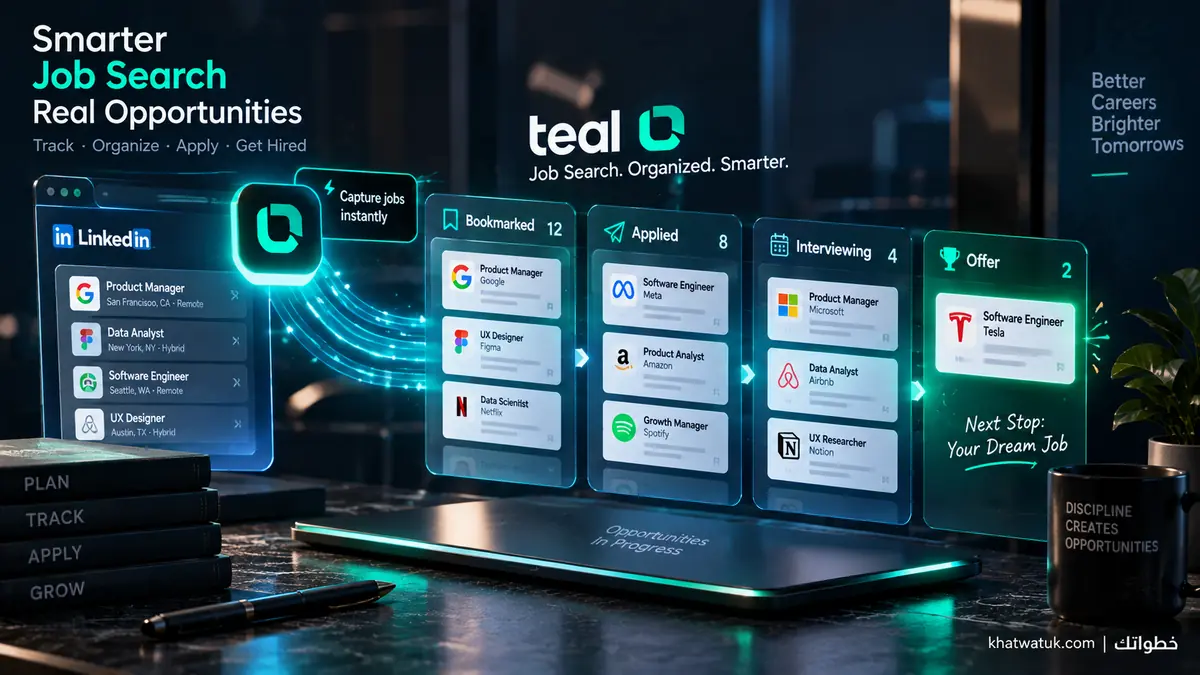
- The Chrome Extension: Whenever you browse job postings on LinkedIn, Glassdoor, Indeed, or ZipRecruiter, Teal's extension grabs the job description, salary range, and company details in one click and dumps them into your pipeline.
- Job Application Tracker: A drag-and-drop Kanban board moves your applications from "Bookmarked" to "Applied", "Interviewing", and "Offer"—with space for contact names, follow-up dates, and salary notes.
- Dynamic Resume Tailoring: Teal scans the saved job description and highlights the exact keywords missing from your current draft, calculating a real-time Match Score.
- AI Bullet Point Generator: Uses proven action-verb formulas to transform passive duties into quantified accomplishments.
- Interview Practice: Built-in mock interviews with AI feedback—a feature Rezi only partially covers.
What is Rezi and How Does It Work?
While Teal aims to organize your whole job hunt, Rezi is built with one obsessive goal: beating applicant tracking systems at their own game.
Rezi was among the pioneers of ATS-targeted optimization. It deliberately strips away fancy graphical templates, columns, and icons that confuse enterprise parsing engines like Taleo, Workday Human Capital Management, and Greenhouse.
Rezi's Key Advantages
- Rezi Score Engine: A comprehensive audit system built on 23 metrics that flags common resume mistakes before you hit apply—including content density, buzzwords, bullet point lengths, and missing contact information.
- Real-Time Content Analysis: Unlike tools that only score after export, Rezi checks your document as you type, catching fatal formatting errors before they reach a recruiter.
- Human Expert Review: Rezi Pro includes one professional resume review per month—a feature no competing builder at this price offers.
- Blockchain Verification: Rezi offers verifiable resume technology to prevent fraud and credential tampering.
- One-Click AI Content Generator: Instantly writes targeted bullet points based on your target job title, ensuring maximum keyword frequency.
- Lifetime Deal Option: Unlike almost every modern SaaS requiring indefinite monthly subscriptions, Rezi offers a one-off lifetime purchase that pays for itself after roughly five months of equivalent Pro billing.

Head-to-Head Comparison: Which Delivers Better Results?
1. ATS Compliance and Formatting: Winner Is Rezi
Teal produces clean, ATS-compliant resumes, but Rezi takes ATS compliance to a scientific level. Rezi forces your document into strict, single-column, bot-proof layouts that are mathematically calibrated for Workday and Taleo scanners. If you are applying to traditional Fortune 500 enterprises, Rezi gives you higher structural assurance.
2. Speed and Multi-Job Customization: Winner Is Teal
If you apply to 10 or 20 different roles each week, customizing a resume from scratch in Rezi can feel repetitive. Teal allows you to maintain one "Master Career History" profile. When applying to a specific role, you simply toggle bullet points on or off with checkboxes, producing a tailored, 1-page PDF in under three minutes.
3. Pricing and Ongoing Value: It Depends on Your Timeline
The fairest way to compare cost is to look at a realistic 90-day job search window:
| Plan | Cost Over 90 Days | Best For |
|---|---|---|
| Teal+ Monthly | $87 | Short, focused searches |
| Teal+ Quarterly | $79 ✓ Best value | A standard 3-month search |
| Teal+ Weekly | $169 (13 weeks) | ⚠️ Avoid—worst value |
| Rezi Pro Monthly | $87 | Intense ATS optimization |
| Rezi Lifetime | $149 once, forever | ✓ Anyone expecting 2+ job changes |
Teal's genuinely generous free tier never expires, making it the easiest tool to test at zero risk. Rezi's lifetime option, however, is unbeatable for professionals who want a reliable resume tool ready for their next career move three years down the line.
Who Should Pick Teal and Who Should Pick Rezi?
Match the tool to your actual bottleneck, not the longest feature list:
- High-volume applicants (20+ roles/month): Teal. The tracker prevents you from losing follow-ups or sending the wrong resume version.
- Fortune 500 and corporate portal applicants: Rezi. Workday and Taleo parsers reward its rigid single-column structure.
- Career changers: Teal's AI summaries and version management help you frame transferable skills per role family.
- Anyone who wants one tool for years: Rezi Lifetime ends the subscription treadmill permanently.
- Budget-first job seekers: Start free on both—Teal's free tier covers tracking, and Rezi's free tier produces one real PDF export.

3 Practical Tips Before You Submit Any Resume
- Export as PDF, not .docx. PDF locks your formatting so the recruiter sees exactly what you designed. Only send .docx if an employer explicitly requests it.
- Run the plain-text test. Copy your exported resume into a plain text editor. If headings, dates, or bullets appear out of order, an ATS parser will read them the same broken way.
- Apply early. The strongest candidates enter the pipeline in the first days a role is posted. A tailored resume that arrives late loses to a decent one that arrived early—speed matters as much as score.
Teal and Rezi Alternatives Worth Knowing
Neither tool is perfect for everyone. Jobscan ($49.95/month) offers the deepest ATS keyword diagnostics but no resume builder. Kickresume excels at AI first drafts and visual templates for students and creatives. Enhancv gives senior professionals drag-and-drop design control. If your bottleneck is pure ATS scoring, also consider Resume Worded. But for the combination of building plus optimizing, Teal and Rezi remain the two most balanced options in 2026.
Pros and Cons: Teal vs Rezi
Teal Pros & Cons
PROS:
- Industry-best Chrome extension for saving jobs.
- Built-in Kanban application tracker.
- Generous permanent free tier with unlimited resumes and tracking.
- Effortless Master Resume toggle system.
- Interview practice and LinkedIn profile review included.
CONS:
- Weekly billing structure can add up over long searches.
- Free AI credits are tightly rationed.
- Templates are modern but fewer classic corporate layouts.
Rezi Pros & Cons
PROS:
- Obsessive, flawless ATS scoring with 23-metric Rezi Score.
- Real-time error detection while you edit.
- Monthly human expert review included with Pro.
- Lifetime pricing option ends subscription fatigue.
- Generates cover letters and resignation letters with AI.
CONS:
- Free version only allows 1 resume and 3 PDF downloads.
- No dedicated job tracker or CRM extension.
- Rigid single-column templates limit visual creativity.
Frequently Asked Questions
Is Teal completely free to use?
Yes. Teal provides a robust free plan that allows you to create unlimited resumes, use the job tracker, and bookmark jobs via its Chrome extension. Free AI usage is limited to 10 resume bullet credits, 2 professional summary credits, and 2 cover letter credits. The paid Teal+ upgrade unlocks unlimited AI and advanced keyword matching.
Which is better for passing ATS algorithms: Teal or Rezi?
Both tools build ATS-friendly resumes, but Rezi holds a clear edge in pure ATS compliance. Rezi's 23-metric Rezi Score audits formatting, content density, and keyword usage in real time, flagging issues before you submit.
Can I use Teal and Rezi together?
Yes, and some 2026 workflow guides recommend it: draft ATS-safe content in Rezi, then track applications and manage resume versions in Teal. It works well, but you will be paying for and juggling two tools—test both free tiers before committing to the stack.
Is Rezi's Lifetime Plan worth it?
If you anticipate updating your resume periodically over the next few years, Rezi's one-time lifetime payment is substantially cheaper than paying recurring monthly subscriptions across multiple job transitions. It typically pays for itself after about five months of equivalent Pro billing.
Does Teal help me track interviews and applications?
Yes, this is Teal's biggest competitive differentiator. Teal features a full Kanban board where you can log contact names, interview rounds, follow-up dates, and salary negotiations directly alongside each tailored resume.
Should I export my resume as PDF or Word?
Export as PDF in nearly all cases. PDF preserves your formatting exactly as designed and is parsed reliably by modern ATS platforms like Workday, Greenhouse, and Lever. Only submit a .docx file if a specific employer or application portal explicitly requires it.
Final Recommendation
If you want our bottom-line recommendation for 2026: Start with Teal. Its ability to capture jobs directly from job boards and organize your search while tailoring resumes gives modern applicants the highest daily leverage.
That said, if you are targeting rigid corporate ATS portals or simply hate subscriptions, Rezi's precision scoring and lifetime deal make it the smarter long-term purchase. Both offer free tiers—there is no reason not to test teal vs rezi yourself before spending a dollar.
