

The best ai job application tool in 2026 depends on whether your priority is zero-risk form autofill, active pipeline tracking, or deep ATS keyword diagnostic scoring. While aggressive auto-apply bots promise effortless mass submissions, modern recruitment firewalls across Workday and Greenhouse frequently disqualify generic AI applications. Our benchmark testing establishes Simplify as the top free copilot for one-click ATS autofill, Teal as the premier platform for pipeline management and real-time job alignment, Jobscan as the essential diagnostic scanner for pre-submission keyword audits, and FastApply as the leading hybrid tool for controlled auto-submissions.
⚡ Quick Verdict: For effortless, zero-cost form autofill across 100+ hiring portals, choose Simplify. For comprehensive career pipeline tracking, interview management, and job description alignment, choose Teal. For guaranteed ATS keyword compliance before you submit, use Jobscan. For high-velocity automated submissions with dynamic CV generation, choose FastApply. For building mathematically optimized ATS resumes from scratch, use Rezi.
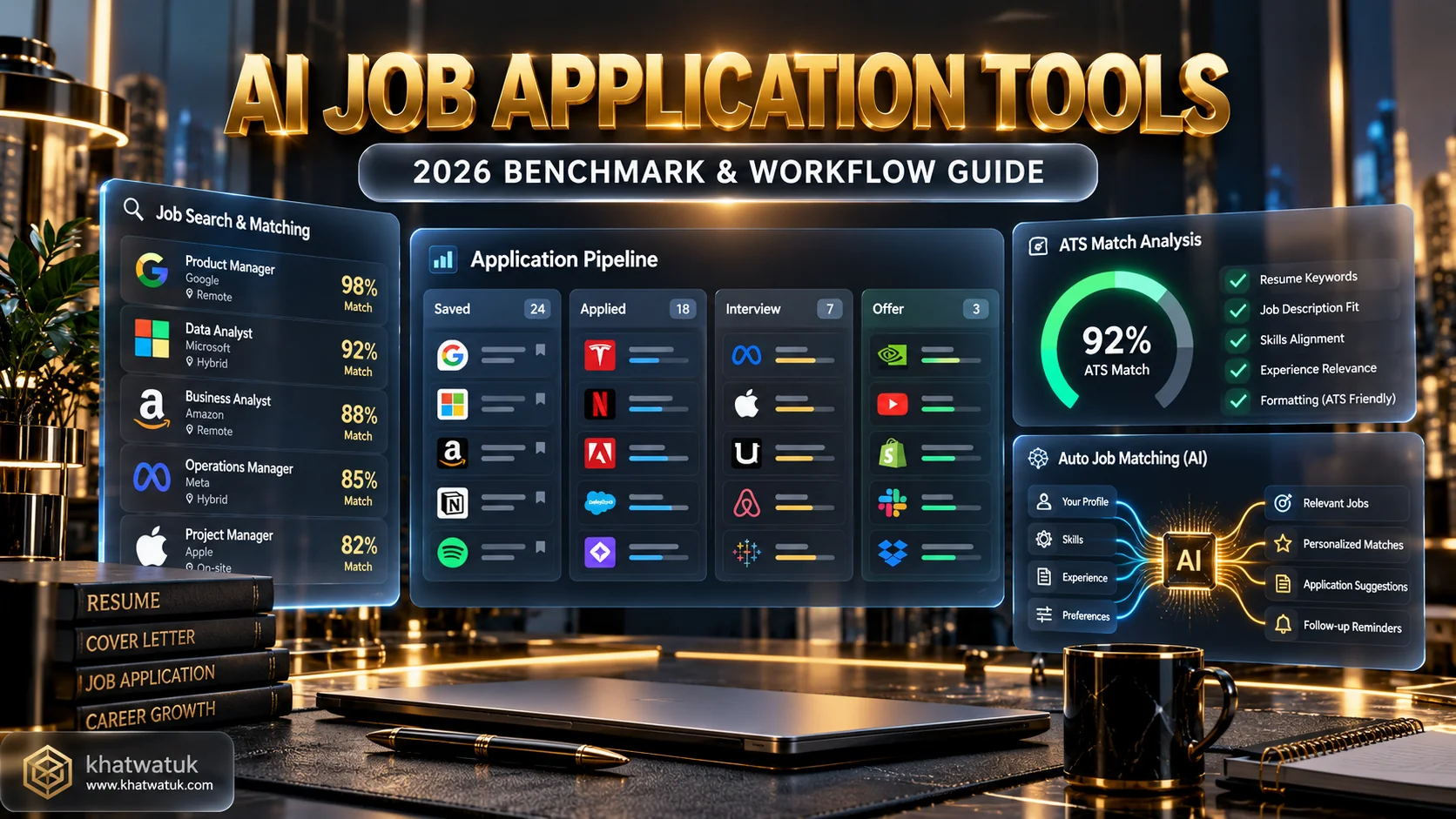
Comprehensive benchmark of the top AI job application tools, copilots, and tracking platforms in 2026.
📋 Table of Contents
- 👉 1. The 2026 AI Job Application Dilemma: Copilots vs Auto-Apply Bots
- 👉 2. Comprehensive Comparison Matrix: Top 7 AI Job Application Tools Tested
- 👉 3. Deep Dive: The Best AI Job Application Tools for Serious Candidates
- 👉 4. The "Choose A if / Choose B if" Decision Archetypes
- 👉 5. ATS Compatibility, Screening Questions, and Bot Detection
- 👉 6. The Optimal 2026 Job Search Workflow: The 3-Tool Power Stack
- 👉 7. Critical Edge Cases, Account Safety, and Subscription Traps
- 👉 8. Frequently Asked Questions
1. The 2026 AI Job Application Dilemma: Copilots vs Auto-Apply Bots
The modern job search has transformed into a high-stakes algorithmic arms race. Between 2023 and 2025, early adopters leveraged first-generation auto-apply bots to flood job boards with thousands of unreviewed resumes. In response, corporate talent acquisition teams and enterprise Applicant Tracking Systems (ATS) deployed sophisticated defensive measures. Today, platforms like Workday, Greenhouse, Taleo, and Lever utilize timing heuristics and bot-detection firewalls to silently discard submissions that originate from unmonitored automated scripts.
To navigate this reality, candidates must distinguish between two fundamentally different technological approaches:
Browser-Based Autofill Copilots (The High-Conversion Model): Tools like Simplify and JobWizard operate directly within your browser session. They parse complex ATS application forms, map your verified career history into the corresponding fields, and populate 90% of the data in seconds. Crucially, they leave the final verification and submission click to you, ensuring zero risk of bot detection and 100% accuracy on sensitive screening questions.
Autonomous Auto-Apply Bots (The High-Volume Model): Platforms like LoopCV and LazyApply attempt to run end-to-end background searches, scraping listings and submitting applications on autopilot. While appealing to candidates seeking sheer volume, unreviewed bot submissions suffer from sub-2% interview callback rates and carry acute risks of platform account suspensions on networks like LinkedIn and Indeed.
As established in our comprehensive pillar guide to the Best AI Resume Builder in 2026, landing interviews in competitive markets requires surgical precision. Spray-and-pray automation burns bridges with corporate recruiters; the winning candidates in 2026 rely on the Review-First Protocol—accelerating data entry through AI while personally inspecting every submission.
2. Comprehensive Comparison Matrix: Top 7 AI Job Application Tools Tested
We benchmarked the leading career automation platforms across five critical operational dimensions: core software category, ATS portal compatibility, automation architecture, pricing transparency, and optimal candidate use case.
3. Deep Dive: The Best AI Job Application Tools for Serious Candidates
Selecting the right software requires matching your career goals with the tool's underlying architecture. Below is an in-depth analysis of the 7 evaluated platforms based on live testing, ATS parsing accuracy, and candidate safety.
3.1 Simplify Copilot: The Undisputed Free Standard for ATS Form Autofill
If you have ever spent 30 agonizing minutes re-typing your work history into a Workday, Greenhouse, or Taleo portal, Simplify is the immediate antidote. Built as a lightweight browser extension, Simplify acts as an intelligent copilot that recognizes application fields across more than 100 enterprise ATS platforms. With a single click, it populates employment dates, education history, job responsibilities, demographic info, and standard screening fields.
- Core Advantage: zero risk of bot detection. Because Simplify runs in your active browser session and requires you to manually review answers before clicking "Submit", it never triggers Cloudflare firewalls or bot penalties.
- Pricing Model: 100% free for job seekers. Simplify monetizes via employer recruitment partnerships and campus hiring networks.
- Limitations: It does not run in the background or submit applications while you sleep; you must manually open each target job posting.
3.2 Teal Career Hub: The Premier Job Application CRM and Matching Engine
While autofill tools solve typing fatigue, Teal solves the far larger strategic challenge: pipeline fragmentation. In a competitive job search, managing 40 to 60 active opportunities across spreadsheets leads to missed follow-ups and uncalibrated interviews. Teal provides a centralized Kanban-style CRM integrated with a powerful browser bookmarking extension. Whenever you view a job on LinkedIn, Indeed, or a corporate career page, Teal extracts the posting details, stores the compensation range, and adds it to your pipeline.
Teal's integrated resume builder analyzes the saved job description in real time, calculating an alignment score and highlighting missing technical proficiencies. For a head-to-head comparison of how Teal compares to dedicated resume engines, read our guide on Teal vs Rezi 2026.
3.3 Jobscan: The Industry Standard for ATS Keyword Diagnostics
If your resume looks stunning to human readers but consistently disappears into the corporate void, the culprit is almost certainly an Applicant Tracking System parsing threshold. Jobscan reverse-engineers the search algorithms used by Fortune 500 portals like Taleo, iCIMS, and Workday. By pasting your resume against a target job description, Jobscan generates a granular match report identifying missing hard skills, soft skills, and formatting red flags.
For an in-depth breakdown of when to prioritize keyword scanning over application tracking, consult our detailed analysis of Jobscan vs Teal (2026).
3.4 FastApply: Controlled Auto-Submissions with Dynamic Tailoring
For candidates who genuinely require higher submission volume, FastApply represents the modern middle ground between crude bots and manual entry. Unlike older tools that blasted a single static PDF to every listing, FastApply utilizes an LLM pipeline to analyze target job postings and dynamically adjust resume bullet points before submitting across supported ATS platforms. It features both a "Co-pilot" mode (autofill with user verification) and an "Auto-pilot" mode for verified compatible portals.
3.5 LoopCV: Autonomous Multi-Board Distribution and Recruiter Outreach
LoopCV operates on a fully autonomous agent model. Once you define your target job titles, geographic preferences, and compensation minimums, LoopCV’s automation loops search multiple job boards (including Indeed, Monster, and CareerBuilder) and submit applications continuously. Furthermore, LoopCV can initiate cold email sequences directly to hiring managers and recruiters, attempting to bypass standard application queues.
⚠️ Caution on Autonomous Outreach: While cold email outreach can yield unexpected executive conversations, sending mass automated emails from personal domains carries significant spam-flagging risks. Only use email automation with secondary burner domains and highly calibrated recipient filters.
3.6 Rezi: Mathematical ATS Optimization and Clean Document Generation
Before any AI application tool can autofill a form, your underlying resume must possess pristine structural integrity. Rezi is purpose-built to eliminate formatting errors that cause ATS parsers to misread employment dates and titles. Utilizing mathematically structured, single-column templates and real-time content analysis, Rezi ensures your resume passes automated screening portals with perfect fidelity. It also features a lifetime access license ($149), providing immense value compared to recurring monthly subscriptions.
3.7 Wrendit: Complete 4-Part Application Packages
Rather than treating the resume as an isolated document, Wrendit generates an integrated 4-part application package for each opportunity: a tailored CV, a role-specific cover letter, a personalized LinkedIn recruiter outreach message, and a set of interview talking points. Powered by Claude 3.5 Sonnet, Wrendit excels at framing cross-functional experience for career pivoters and senior professionals. To explore dedicated cover letter software, see our benchmark of the Best AI Cover Letter Generator.
4. The "Choose A if / Choose B if" Decision Archetypes
To eliminate decision paralysis, match your immediate job search bottleneck to our verified decision archetypes:
🎯 The Candidate Decision Framework:
- Choose Simplify if: You are actively applying on company career pages (Workday, Greenhouse) and want to slash your application time from 25 minutes down to 3 minutes without spending a single dollar or risking an account suspension.
- Choose Teal if: Your primary problem is organization—you are applying to dozens of roles, losing track of recruiter communications, and need a unified dashboard that links job descriptions to resume bullet points.
- Choose Jobscan if: You have strong professional qualifications but receive immediate automated rejection emails within 48 hours, indicating your resume lacks the specific semantic keywords required by enterprise ATS parsers.
- Choose FastApply if: You are seeking high submission velocity across multiple platforms and want automated tailoring, but are willing to monitor your application logs to prevent screening errors.
- Choose Rezi or Wrendit if: You are transitioning into a new industry, crafting specialized executive resumes, or need complete application packages with integrated recruiter messaging. Senior leaders should also review our specialized guide on the best resume builder for executives.
5. ATS Compatibility, Screening Questions, and Bot Detection
To understand why review-first copilots outperform automated bots, one must examine the technical architecture of modern Applicant Tracking Systems. Enterprise portals no longer function as simple database forms; they employ multi-layered bot-detection scripts designed to maintain candidate quality.
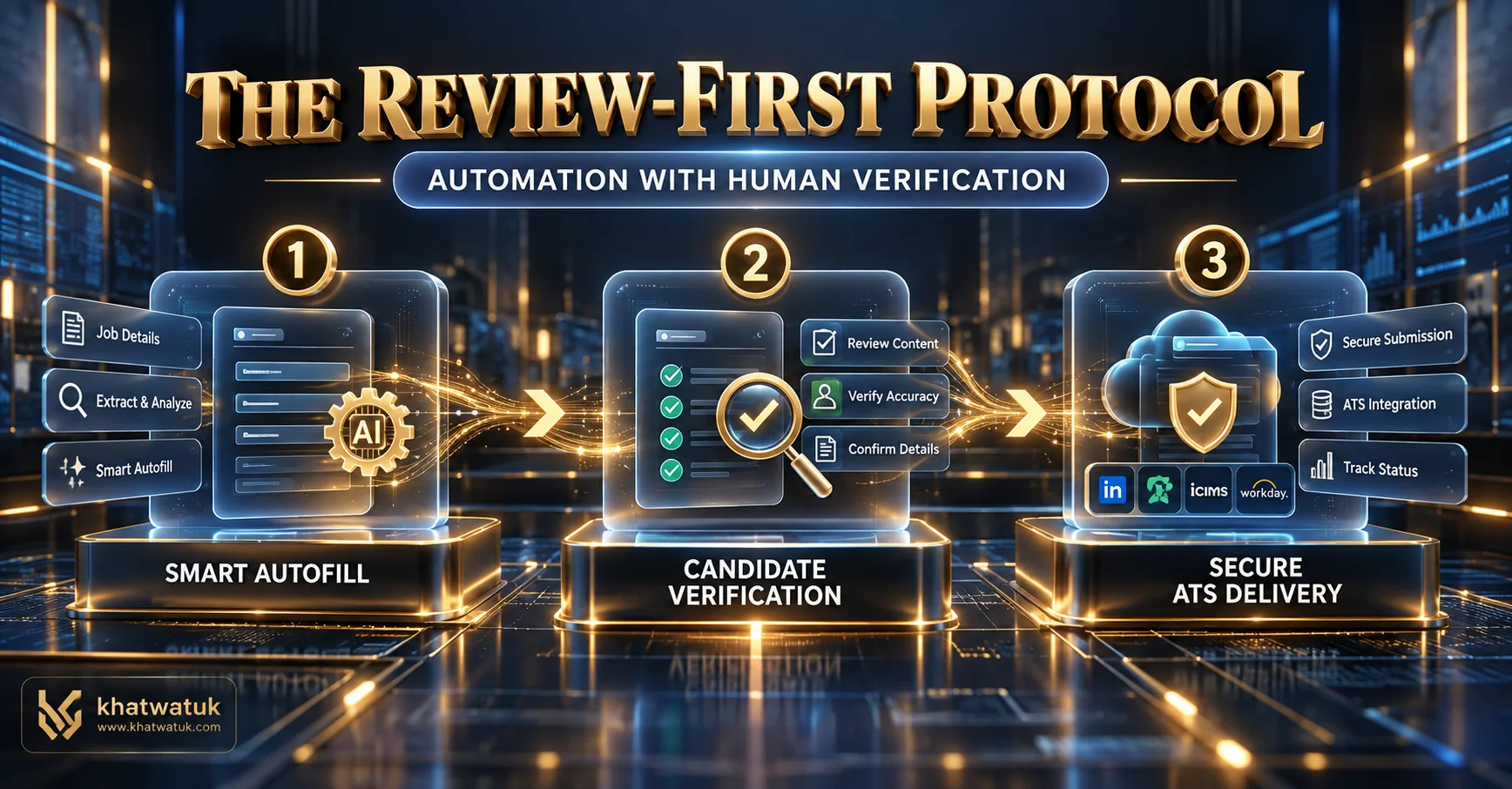
The review-first workflow: how intelligent autofill combined with human verification prevents ATS bot disqualification.
5.1 The Technical Anatomy of Bot Detection
Enterprise portals hosted on Workday and Greenhouse frequently employ Cloudflare bot management and custom JavaScript listeners that monitor DOM events. When a primitive auto-apply bot programmatically injects text into an input field without firing genuine keydown, keyup, and focus events, or submits a 5-page form in under 2 seconds, the session is flagged as non-human traffic. In some cases, the application displays a CAPTCHA challenge; in more insidious setups, the portal accepts the submission visually but routes the candidate directly into a silent rejection folder.
5.2 The Screening Question Minefield
The single greatest vulnerability of unmonitored auto-apply bots is custom employer screening questions. Enterprise applications routinely include knockout questions such as:
- "Will you now or in the future require visa sponsorship?"
- "What is your target base salary expectation?"
- "Are you subject to any non-compete agreements with former employers?"
When an automated bot misinterprets a dropdown or enters a default response, the applicant is instantly eliminated by automated knockout filters. Browser copilots like Simplify highlight these custom fields for candidate confirmation, eliminating catastrophic disqualification errors.
6. The Optimal 2026 Job Search Workflow: The 3-Tool Power Stack
Rather than searching for a mythical single tool that handles everything, elite candidates build a high-velocity, modular workflow combining three specialized best-in-class applications:
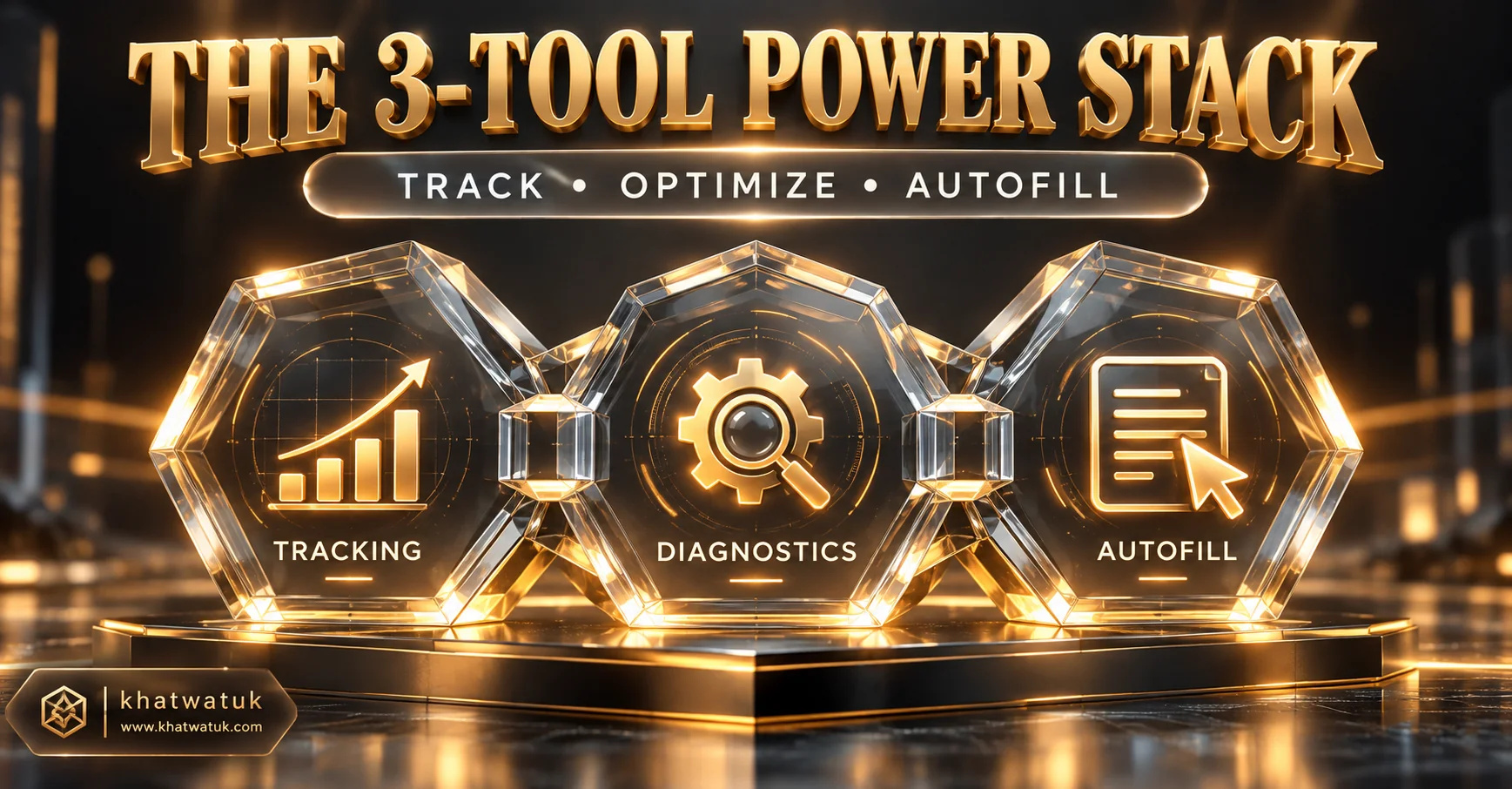
The 3-tool power stack: combining pipeline tracking, ATS keyword diagnostics, and form autofill for maximum search velocity.
🚀 The 3-Step High-Conversion Application Protocol:
- Step 1: Capture & Pipeline Management (Teal): While browsing job boards (LinkedIn, Indeed, Otta), use Teal's browser extension to bookmark target listings into your centralized CRM. Teal tracks application deadlines, saves recruiter contacts, and monitors where you stand in each hiring funnel.
- Step 2: Pre-Submission ATS Audit (Jobscan): Before submitting to enterprise portals, paste the job posting and your current resume into Jobscan. Ensure you achieve an 80% or higher ATS keyword match score by incorporating missing hard skills and metrics. For students and recent grads crafting initial resumes, see our guide on the Best Resume Builder for Students.
- Step 3: Rapid Autofill & Human Submission (Simplify): Navigate to the employer’s official application portal. Let Simplify autofill 90% of the repetitive fields in seconds. Take 60 seconds to review the populated answers, confirm salary expectations, and click "Submit Application" yourself.
By executing this 3-step stack, candidates can submit 5 to 8 deeply tailored, ATS-compliant applications per hour with absolute peace of mind.
7. Critical Edge Cases, Account Safety, and Subscription Traps
While AI application software delivers undeniable productivity gains, navigating the commercial landscape requires vigilance against common subscription traps and security edge cases.
7.1 The LinkedIn Account Suspension Risk
Under Section 8.2 of the LinkedIn User Agreement, utilizing unauthorized third-party automation tools, bots, or browser scrapers is strictly prohibited. Aggressive auto-apply bots that interact directly with LinkedIn Easy Apply trigger automated rate limits. As documented in investigative audits, several high-volume bots have caused users to receive permanent LinkedIn account restrictions. For high-earning professionals, losing a 10-year LinkedIn network over an automated job bot is an unacceptable risk; stick exclusively to client-side copilots like Simplify.
7.2 The Recurring Weekly Billing Trap
A growing number of career tech platforms advertise deceptive pricing structures, promoting "weekly trials" for $7 to $9. Unless manually canceled within days, these trials automatically convert into recurring charges of $36 to $45 per month. Always audit your billing settings immediately after activating any software trial.
7.3 Expiring Credit Packs
Platforms that charge by "application credits" frequently implement 30-day expiration windows. If you purchase a 100-credit bundle for $50 but only apply to 25 roles this month, the remaining 75 credits vanish upon renewal. Prioritize subscription platforms with unlimited usage (like Teal) or free-core extensions (like Simplify) over credit-metered schemes.
8.
Automating job applications drastically increases the volume of recruiter invitations landing in your inbox. To convert these high-volume screening calls into formal offers, pair your application autofill software with an advanced AI interview copilot that helps you anticipate tough technical questions and track speech delivery metrics.
As automated application tools flood your calendar with initial screening invitations, choosing the right live support software is critical. Explore our detailed review of Final Round AI vs Parakeet AI to discover whether pay-as-you-go interview credits or multi-agent career suites deliver superior value during recruiter calls.
Frequently Asked QuestionsQ1: What is the best AI tool to apply for jobs automatically?
While full auto-apply platforms like FastApply and LoopCV offer automated submissions across multiple platforms, the consensus among recruitment experts is that browser autofill copilots (specifically Simplify) combined with application pipeline managers (Teal) yield significantly higher interview conversion rates by avoiding ATS bot penalties.
Q2: Is there a completely free AI job application tool?
Yes. Simplify provides a 100% free Chrome extension that autofills job applications across more than 100 ATS platforms (including Workday, Greenhouse, and Lever) without charging candidates. Teal also offers a robust free tier for pipeline tracking and resume matching.
Q3: Can employers and ATS tell if you use AI to apply for jobs?
Yes. Employers identify AI applications through technical bot detection (Cloudflare scripts that catch rapid DOM input tampering without human keystroke timing) and content uniformity (generic, repetitive buzzwords produced by unedited LLMs). Using a review-first copilot and personalizing your bullet points eliminates these detection flags.
Q4: Will using an auto-apply bot get my LinkedIn account banned?
Yes, aggressive auto-apply bots that automate LinkedIn Easy Apply or scrape user data directly violate LinkedIn’s Terms of Service. LinkedIn actively monitors bot-like activity and frequently imposes temporary restrictions or permanent profile terminations on accounts using unauthorized automation extensions.
Q5: What is the difference between an AI job copilot and an auto-apply bot?
An AI job copilot (like Simplify or JobWizard) functions within your active browser, filling out complex form fields while leaving the final verification and submission click to you. An auto-apply bot runs independently in the background, attempting to submit applications without human oversight.
Q6: How do AI job application tools handle Workday screening questions?
Autofill copilots parse custom Workday dropdowns and text areas, pulling saved answers from your profile for standard items (education, previous employment) while prompting you to manually confirm critical knockout questions (such as salary expectations or visa status). Autonomous bots often guess default values, frequently leading to instant disqualification.
Q7: Does mass-applying with AI actually land job interviews?
Data indicates that unmonitored mass-applying yields an interview callback rate below 1% to 2%. In contrast, submitting 10 to 15 tailored applications per week using the 3-Tool Power Stack (Teal + Jobscan + Simplify) achieves callback rates between 8% and 15%.
Q8: What is the best AI tool to optimize resumes for ATS keywords?
Jobscan is the gold standard for pre-submission ATS keyword diagnostics, reverse-engineering employer match algorithms. Teal also provides excellent real-time job description alignment scores within its built-in resume builder.
Q9: How much do AI job application tools cost per month?
Pricing varies from $0 for Simplify's core extension and basic Teal, to $14 to $29 per month for advanced tailoring suites (FastApply, Teal+), and up to $49.95 per month for enterprise diagnostic tools like Jobscan Premium.
Q10: What is the safest way to use AI in my job search?
Adopt the Review-First Protocol: utilize AI to eliminate repetitive data entry (Simplify), manage your application pipeline (Teal), and verify keyword density (Jobscan), but always review screening questions and personally click the submit button on the employer's official portal.
