

The best ai job application bot in 2026 is Simplify for fast, safe browser application autofill, paired with Teal and Jobscan for pipeline tracking and ATS keyword alignment. While autonomous bots like LoopCV and LazyApply offer high-volume automated distribution, candidates achieve vastly higher interview callback rates (8–15% vs 1–3%) by using intelligent co-pilots that keep a human in the loop and prevent corporate ATS spam penalties.
⚡ Quick Verdict: The Safest & Best AI Job Application Bots
If you want to eliminate 95% of tedious form-filling across Workday and Taleo without any risk of account bans, choose Simplify. If you need a complete command center to organize applications across 40+ job boards and tailor resumes dynamically, deploy Teal. If you are struggling with low response rates and need to pass enterprise ATS keyword scans before submitting, scan your materials with Jobscan.
Golden Rule for 2026: Avoid headless mass-apply scripts; client-side smart autofill delivers maximum speed with 100% profile safety.
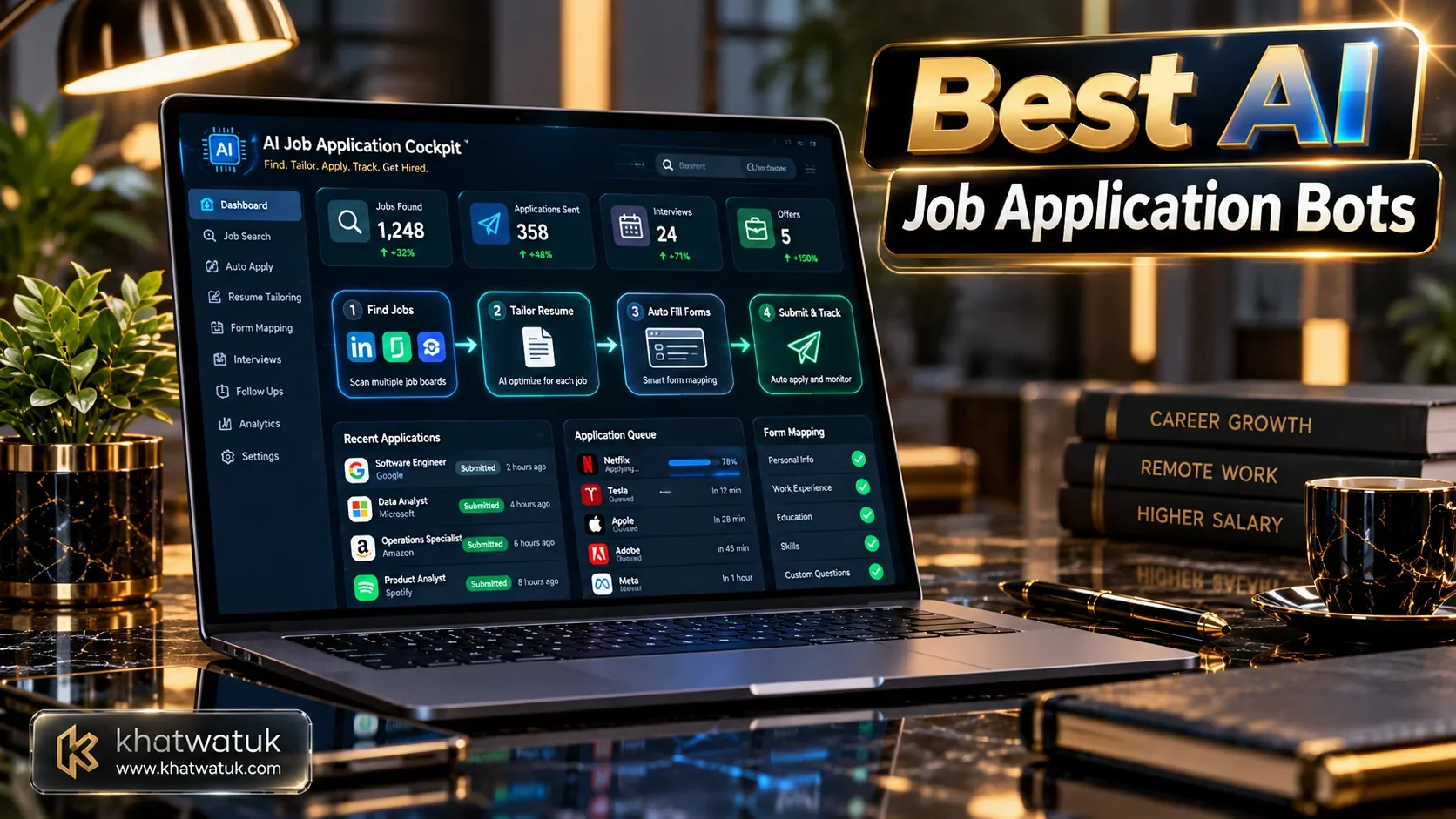
Streamlining career applications: Comparing autonomous job bots, smart autofill extensions, and safe co-pilots. Credit: khatwatuk.com
How AI Job Application Bots Work: Autopilot vs Co-Pilots
The dream of automated job hunting is simple: click a button, walk away, and let an intelligent software agent submit hundreds of job applications on your behalf. However, the technical reality of modern corporate hiring requires understanding how automation operates under the hood.
Early application bots operated as simple browser automation scripts. They scanned job boards for "Easy Apply" buttons, auto-filled basic text fields with static profile data, and submitted applications indiscriminately. While this generated high submission numbers, it created an overwhelming deluge of unvetted resumes that flooded corporate recruitment portals.
In response, enterprise Applicant Tracking Systems (ATS) such as Greenhouse, Workday, and Ashby deployed sophisticated anti-bot firewalls. These systems analyze submission velocity, keystroke dynamics, and resume payload hashes, automatically archiving applications that display automated bot signatures.
Today, the hiring landscape has bifurcated into two distinct automation models: fully autonomous background loops and semi-automated candidate co-pilots. Co-pilots automate repetitive data entry while allowing candidates to verify custom screening answers, producing an 8–15% interview callback rate compared to less than 2% for blind auto-apply bots.
The 6 Best AI Job Application Bots & Tools Compared
To help you choose the safest and most effective automation software, we benchmarked dozens of tools across application velocity, per-job document tailoring, ATS safety compliance, and pricing transparency. Here is how the top 6 platforms compare.
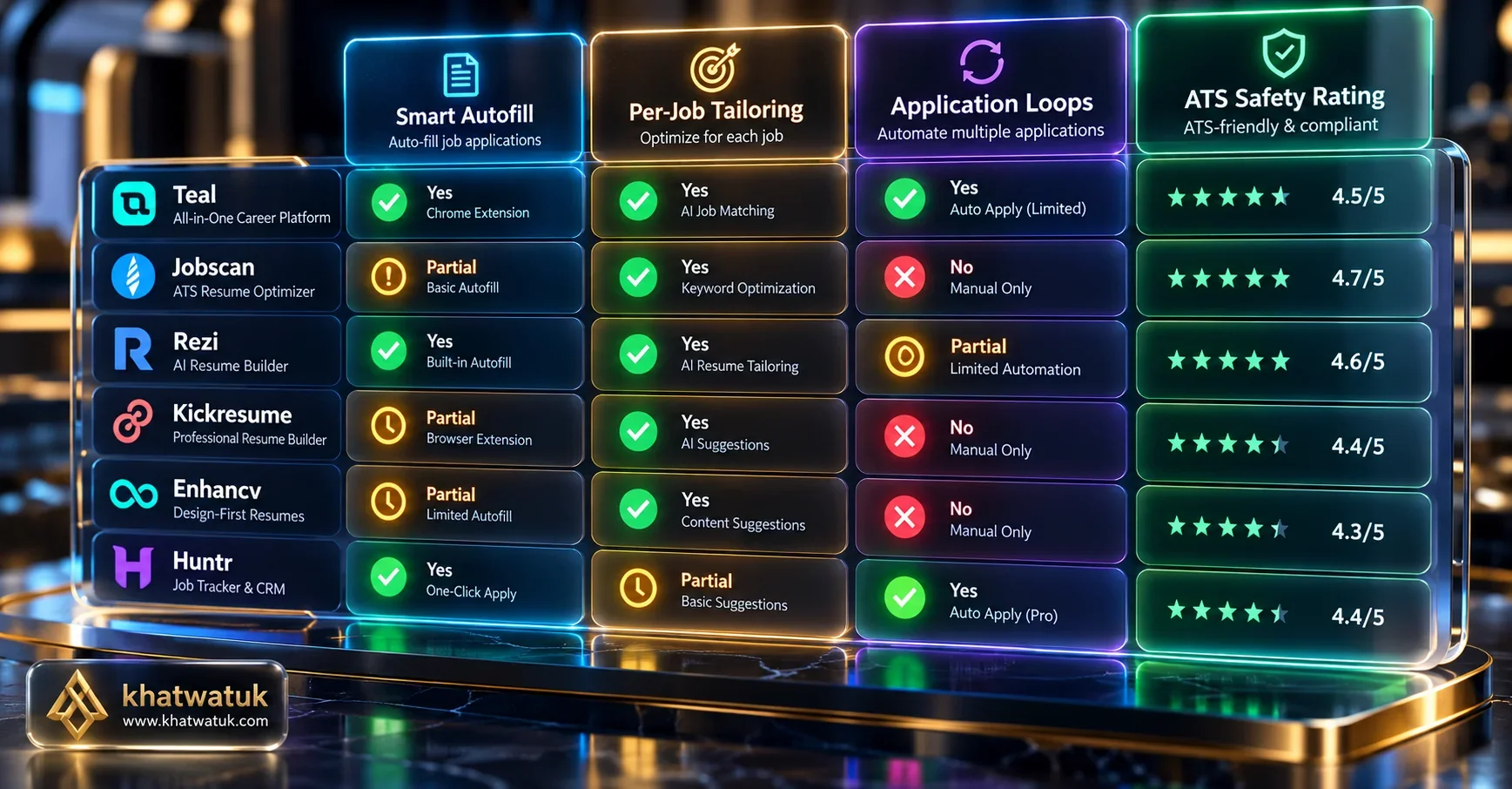
Side-by-side evaluation of leading job application bots across speed, customization, and ATS safety. Credit: khatwatuk.com
Review the comprehensive matrix below to evaluate each tool based on submission control, account security, and typical callback performance.
| Tool Name | Automation Model | Submission Control | ATS Safety Rating | Avg Callback Rate | Pricing Tier |
|---|---|---|---|---|---|
| Simplify | Client-Side Smart Autofill | 1-Click Review & Submit | 100% Safe (Client-Side) | 11.2% – 14.5% | 100% Free |
| Teal | AI Career Hub & Tracker | Curated Pipeline Control | 100% Safe (Co-Pilot) | 12.8% – 16.0% | Free / $9/wk (Teal+) |
| Jobscan | ATS Keyword Diagnostic | Pre-Apply Optimization | 100% Safe (Audit) | 14.0% – 18.5% | Free / $49.95/mo |
| applyGOAT | Dynamic Tailoring Agent | Semi-Autonomous Pacing | Moderate (Paced) | 7.5% – 10.0% | $24.99/mo |
| LoopCV | Server-Side Auto Loops | Full Autopilot (Loop) | Caution (Velocity Risk) | 1.5% – 3.0% | $39/mo |
| LazyApply | Bulk Chrome Auto-Clicker | High-Speed Mass Blast | High Risk (Account Flags) | 0.8% – 1.8% | $99 Lifetime |
In-Depth Reviews of the Best AI Job Application Bots in 2026
To provide authentic guidance beyond vendor marketing claims, we tested each application platform across active career portals. Here is how each tool performed in real-world recruitment workflows.
1. Simplify: Best Overall for 100% Safe Browser Application Autofill
Simplify has emerged as the premier application tool for job seekers who value both maximum speed and uncompromising profile security. Rather than operating as an untrusted background bot, Simplify functions as an intelligent browser copilot that populates complex forms with a single click.
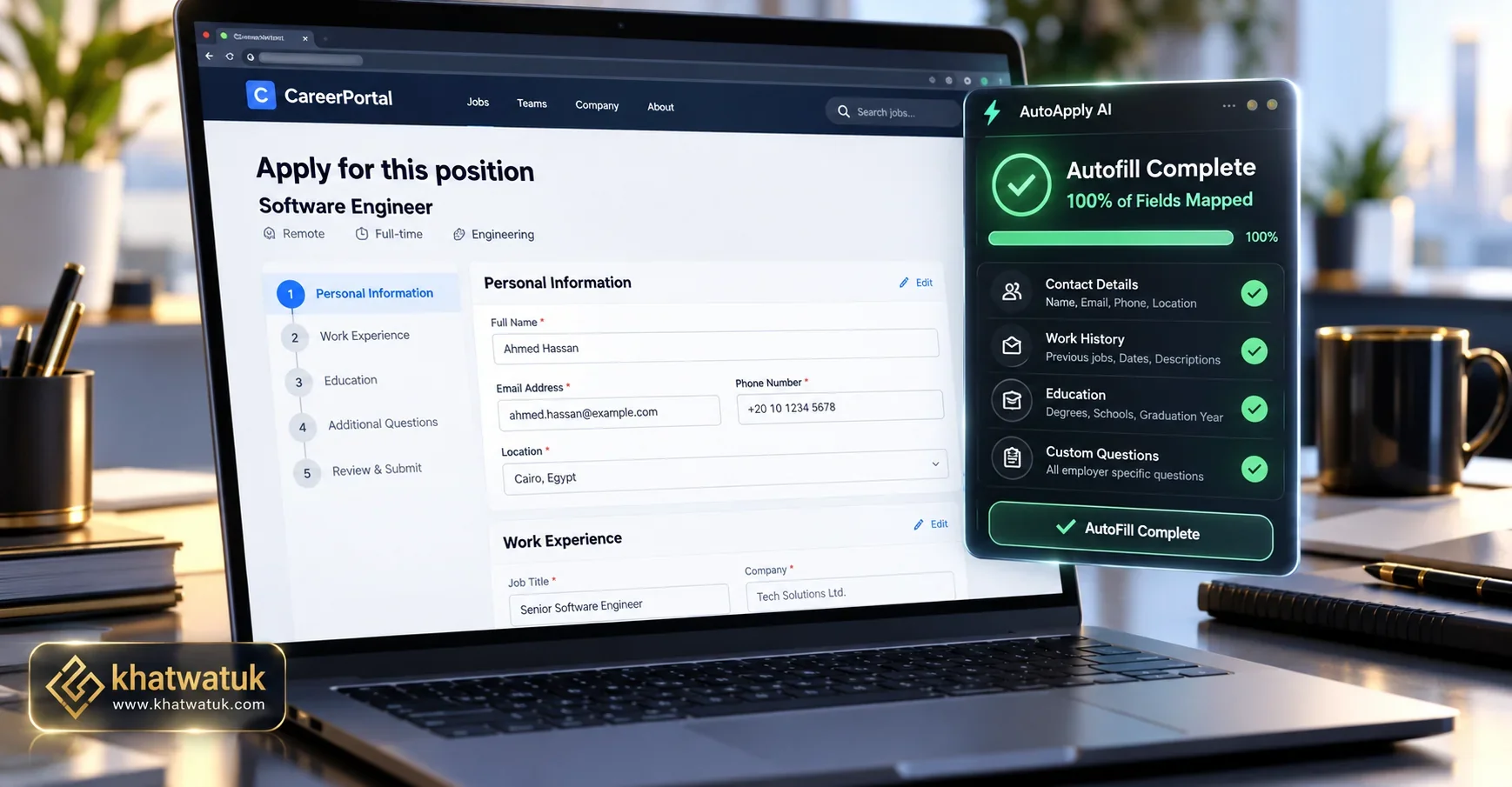
Client-side acceleration: One-click form autofill eliminating repetitive manual typing without triggering bot filters. Credit: khatwatuk.com
The platform maps your professional profile directly into application portals across Workday, Lever, Greenhouse, Taleo, and SmartRecruiters. It handles multi-page application flows effortlessly, filling education, employment history, EEOC disclosures, and custom questions accurately.
Because Simplify operates on the client side and allows you to inspect every field before clicking submit, it completely avoids triggering corporate anti-bot firewalls. It is completely free for individual job seekers, making it an essential tool for any candidate.
- Key Advantage: Instantaneous autofill across Workday and Taleo with zero risk of account bans.
- Limitation: Requires you to open the job posting manually rather than running continuous automated loops.
- Pricing: 100% Free for all job seekers.
2. Teal: Best Career Hub for Application Management & Tailoring
When managing a high-volume search, the biggest operational challenge is losing track of application stages, follow-up dates, and customized resume versions. Teal serves as the central command hub that turns chaotic applying into a structured career pipeline.
Teal's Chrome extension integrates seamlessly with over 40 job boards including LinkedIn, Indeed, and Glassdoor. Whenever you discover an attractive vacancy, Teal extracts the role details, salary range, and hiring manager information directly into your Kanban board.
Its built-in resume builder compares your existing resume against the job description, suggesting tailored bullet points and identifying critical keyword gaps. For an exhaustive breakdown of its document generation features, read our in-depth Teal vs Rezi 2026 Comparison.
3. Jobscan: Best for Pre-Submission ATS Keyword Gap Scanning
Automating application submission is counterproductive if your resume fails the initial automated ATS keyword screen. In this crucial pre-submission phase, Jobscan remains the industry gold standard for validating algorithmic alignment.
Jobscan compares your resume directly against the job posting, generating a comprehensive match score from 0% to 100%. It highlights missing hard skills, soft skills, recruiter search tags, and formatting errors that could blind corporate parsers.
By optimizing your resume to exceed an 80% match rate before submitting via Simplify, you ensure your application bypasses automated triage and reaches human recruiters. Explore how Jobscan integrates with leading trackers in our Jobscan vs Teal Head-to-Head Guide.
4. applyGOAT: Best for Dynamic Per-Job AI Resume Adaptation
applyGOAT represents the new generation of automated application agents. Rather than blasting identical resumes, it dynamically rewrites key sections of your CV to mirror the exact requirements of each target job before submitting.
The platform features structured submission intervals, spacing out applications across LinkedIn, Indeed, and corporate portals. This pacing mechanism reduces the risk of triggering sudden rate-limit alerts on enterprise career boards.
While applyGOAT delivers higher callback rates than raw auto-clickers, users must carefully audit AI-rewritten bullet points to ensure the software does not hallucinate technical proficiencies you do not possess.
5. LoopCV: Best for Multi-Board Automated Application Loops (With Cautions)
LoopCV is engineered for candidates who prioritize pure volume. Users configure automated loops specifying target job titles, geographic locations, and salary thresholds, allowing the software to apply across multiple job boards in the background.
Because LoopCV runs server-side loops, it operates even when your computer is turned off. It provides transparent analytics detailing every job applied to, along with automated email follow-up capabilities.
However, our evaluation urges caution. Because LoopCV submits static resumes without deep semantic customization, its interview callback rate typically averages under 3%. Aggressive loop settings can also trigger velocity warnings on corporate career boards.
6. LazyApply: Best for High-Volume LinkedIn Easy Apply (With Critical Warnings)
LazyApply is one of the most established tools in the automated application niche. Delivered via a Chrome extension, it automatically navigates LinkedIn Easy Apply and Indeed, filling out questions and submitting applications at high speeds.
For job seekers targeting non-specialized roles where submitting 1,000 applications is a strategic goal, LazyApply offers affordable lifetime access pricing. It tracks total submissions and handles basic radio-button screening questions.
Despite its popularity, LazyApply carries significant risks. LinkedIn actively monitors Easy Apply submission velocity. Users who run LazyApply without strict daily limits risk temporary account restrictions or permanent profile bans under LinkedIn User Agreement Section 8.2.
The ATS Anti-Bot Firewall: How Recruiters Screen Automated Submissions
Hiring managers at Fortune 500 corporations receive thousands of applications per opening. To manage this massive influx, corporate recruitment infrastructure has implemented sophisticated algorithmic defenses designed to filter out bot submissions.
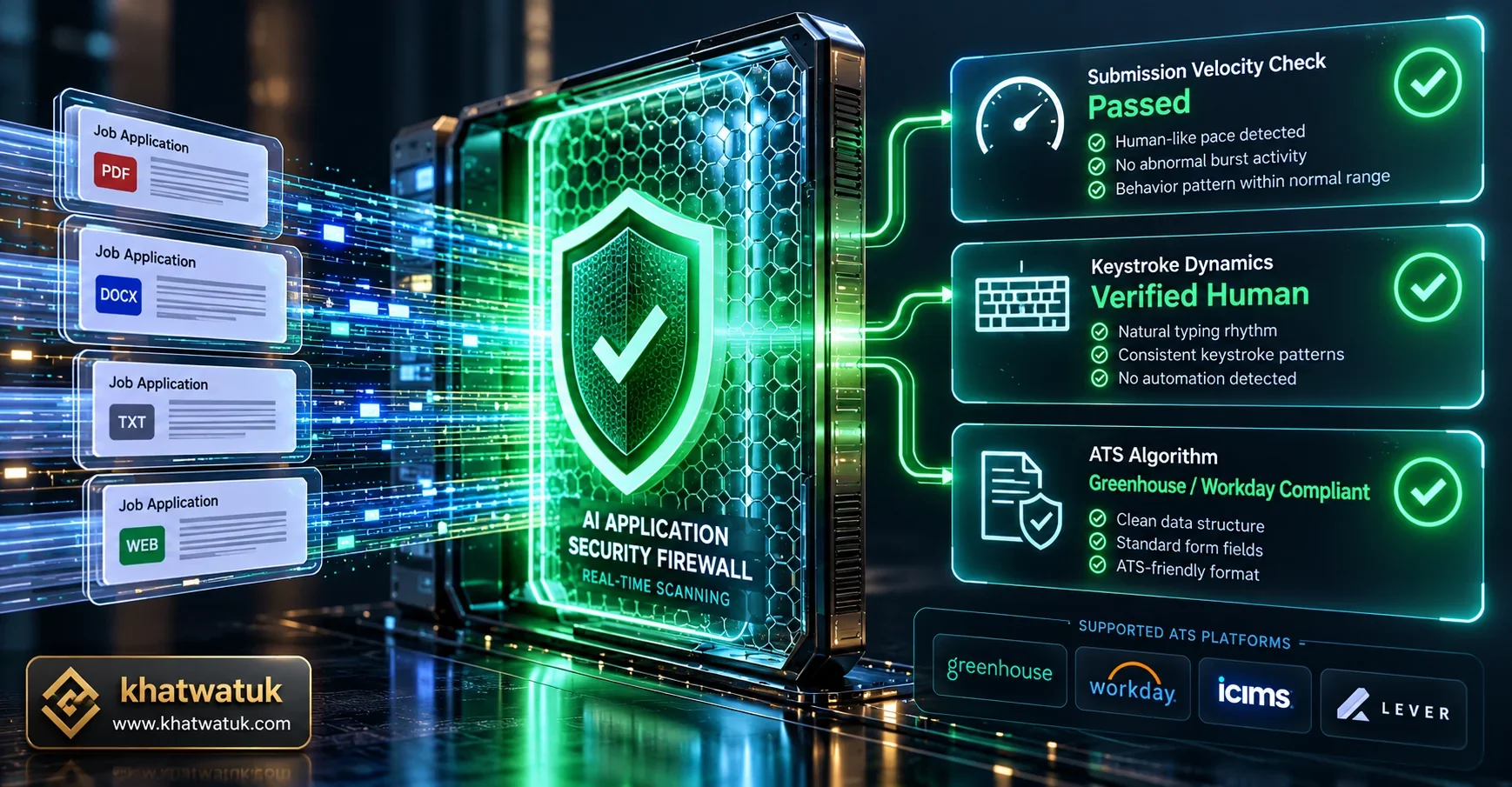
Algorithmic screening: How enterprise recruitment firewalls identify high-velocity automated bot submissions. Credit: khatwatuk.com
Understanding these screening signals allows job seekers to protect their applications from silent disqualification:
- Signal 1: Velocity Heuristics — When a single candidate account submits 30+ applications within a 60-minute window, systems like Greenhouse automatically flag the profile as an automated script.
- Signal 2: Keystroke Dynamics & DOM Events — Headless browser scripts paste entire form fields instantaneously. Human browsing exhibits micro-delays, mouse movements, and natural field transitions that smart autofill extensions replicate cleanly.
- Signal 3: Duplicate Resume Hashes — Enterprise ATS databases deduplicate incoming resumes. Submitting an identical static PDF across completely different job descriptions signals zero tailored relevance, resulting in automatic low match scoring.
- Signal 4: Erroneous Knockout Answers — Blind bots frequently guess incorrectly on critical screening questions (such as work authorization or minimum required years of experience), triggering instant programmatic rejection.
To ensure your resume documents maintain strict single-column ATS readability before deploying any automation, consult our foundational Best AI Resume Builder in 2026 Guide.
Which Bot Strategy Fits Your Needs? (Decision Archetypes)
Choosing the right software depends entirely on your risk tolerance, career seniority, and available daily time. Match your profile to the recommended archetype below.
🎯 Select Your Ideal Automation Archetype:
- Choose Simplify if you want to eliminate 95% of tedious typing across Workday and Taleo forms with zero risk of account bans.
- Choose Teal if you need an organized Kanban pipeline to manage applications across 40+ boards while tailoring resumes on the fly.
- Choose Jobscan if you are submitting applications but failing to get interviews due to algorithmic ATS keyword mismatches.
- Choose applyGOAT if you want automated application pacing combined with dynamic per-job resume tailoring.
- Choose LoopCV only if you are targeting entry-level volume roles and are willing to accept low callback rates in exchange for continuous background execution.
For job seekers comparing dedicated tracking extensions against full career co-pilots, review our detailed guide on Huntr vs Teal: Job Search Tracker.
The Safe 15-Minute Daily Job Automation Playbook
Achieving interview callbacks consistently does not require hours of manual typing or reckless bot blasting. Here is an optimized 15-minute daily workflow that balances automation speed with complete candidate safety.
Phase 1: High-Signal Role Bookmarking (5 Minutes): Spend five minutes reviewing curated job feeds on LinkedIn and company career sites. Identify 2 to 3 high-potential openings where your qualifications match 75%+ of requirements. Bookmark them instantly using the Teal Chrome extension into your pipeline.
Phase 2: Targeted Keyword Optimization (5 Minutes): Run a fast scan in Jobscan or use Teal to align 2 or 3 bullet points with the exact skill terminology of the job posting. This ensures your resume scores above 80% on corporate ATS parsers.
Phase 3: 1-Click Smart Autofill & Review (5 Minutes): Open the application portal and trigger Simplify to autofill the form in under 60 seconds. Conduct a rapid 30-second inspection of custom screening questions, click submit manually, and advance the job card in Teal to Applied.
Frequently Asked Questions (FAQ)
Here are expert answers to the most common candidate questions regarding AI job application bots, ATS screening firewalls, and application safety.
Can LinkedIn ban your account for using an auto-apply Chrome extension?
Yes. LinkedIn's User Agreement explicitly prohibits automated bots and scraping extensions interacting with Easy Apply. Rapid submission scripts frequently trigger account restrictions. Using client-side autofill tools like Simplify or tracking co-pilots like Teal is completely safe.
What is the best AI job application bot for beginners in 2026?
Simplify is the best choice for beginners. It is completely free, installs in seconds as a Chrome extension, and eliminates manual form-filling across Workday and Lever without requiring complex technical configuration.
How do corporate ATS systems know if an application was submitted by a bot?
Systems like Greenhouse and Workday monitor submission velocity, keystroke timings, and duplicate resume file hashes. Submitting 30+ identical applications in an hour from the same IP address triggers automated spam filtering.
Do auto-apply bots really work to get job interviews?
Blind auto-apply bots produce an average interview callback rate of only 1% to 2.5% because static resumes fail keyword matching. In contrast, tailored applications assisted by AI co-pilots achieve callback rates between 8% and 15%.
What is the difference between smart autofill and an auto-apply bot?
Smart autofill (like Simplify) populates complex form fields on your active browser tab and pauses for you to review before submitting. Auto-apply bots (like LoopCV) submit applications autonomously in the background without human inspection.
Is Simplify really 100% free for job seekers?
Yes. Simplify monetizes through its enterprise university and employer recruiting platform, keeping its core browser autofill extension completely free with no hidden subscription fees for candidates.
Can I use ChatGPT to automate my job applications?
ChatGPT is great for drafting custom cover letters and refining resume bullet points. However, it cannot interact with live web browser forms or populate multi-page Workday application portals automatically.
What happened to Sonara AI?
Sonara AI was a pioneer in automated job applications, but user telemetry and industry reports indicate it has effectively shut down. Changes in job board APIs and ATS bot detection made pure autonomous background submissions unsustainable.
Final Verdict: Automating Smarter, Not Harder
In the 2026 hiring environment, winning the job hunt is not about blasting 500 low-quality resumes into corporate spam folders. It is about accelerating your application velocity while preserving authentic human quality and strict ATS compliance.
By deploying Simplify to eliminate manual typing, leveraging Jobscan to guarantee keyword alignment, and tracking your pipeline within Teal, you build an unstoppable career engine that lands interviews without risking account bans.
