

To understand how to compare resume to job description postings effectively, job seekers must systematically cross-reference their career achievements against the employer's explicit hard skills, required qualifications, and technical terminology. This dual-document comparison ensures your resume successfully navigates algorithmic Applicant Tracking System (ATS) filters while immediately presenting compelling, quantified evidence to human hiring managers.
Quick Verdict: Top Comparison Approaches at a Glance
For rigorous enterprise ATS simulation mimicking Workday and Taleo keyword parsers, Jobscan remains the gold standard for granular keyword frequency auditing. If you need a comprehensive job application tracking hub with integrated AI bullet tailoring, Teal provides the smoothest free tracking workflow. For candidates requiring guaranteed ATS-compliant formatting and one-time pricing, Rezi delivers precise keyword targeting without recurring monthly subscription costs.
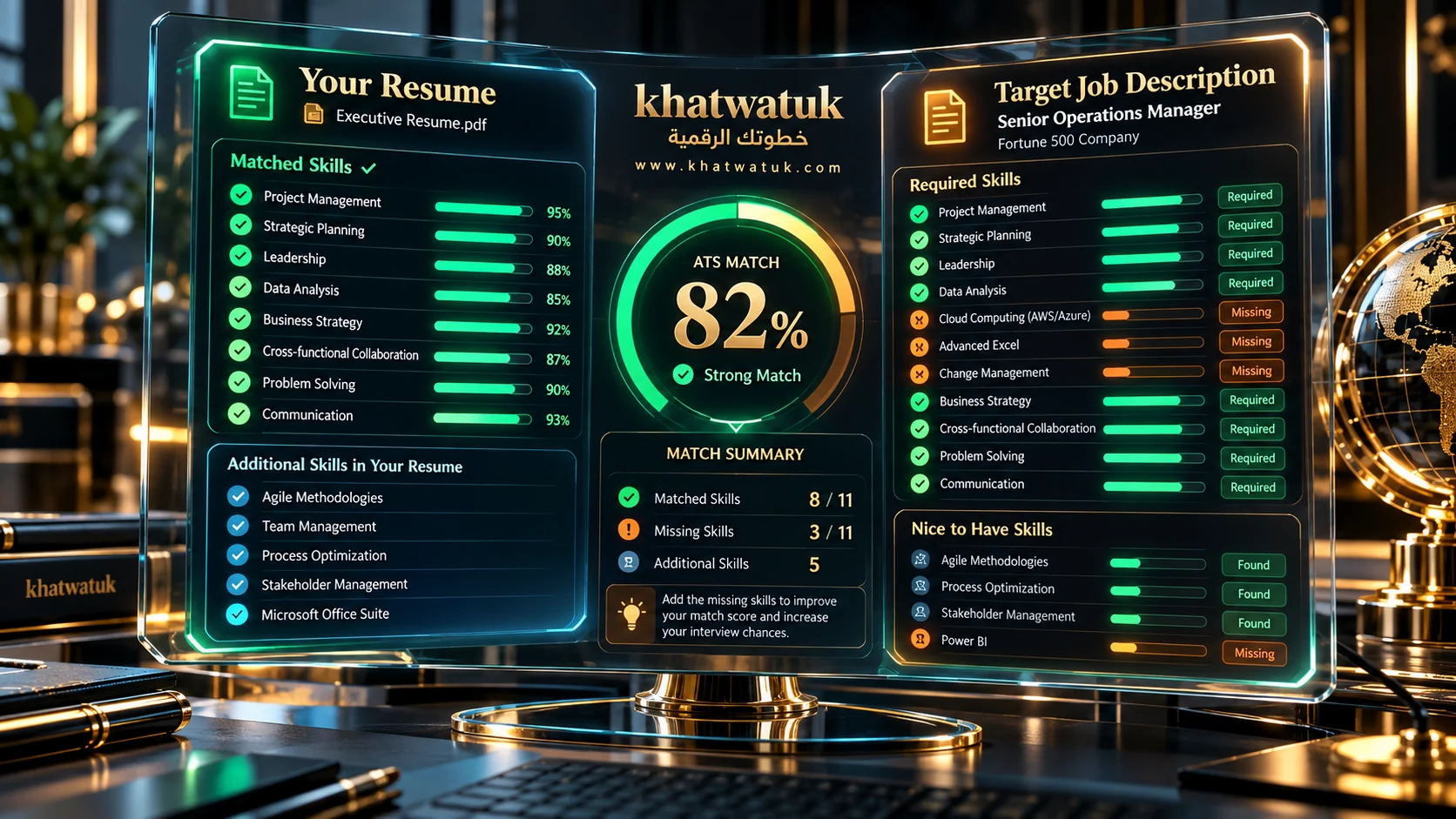
Comparison Matrix: Top 5 Tools to Compare Resume to Job Description (2026)
Selecting the right software to compare your resume against a job description depends on your budget, application volume, and technical requirements. While some platforms focus solely on algorithmic keyword frequency scanning, others integrate full resume builders and application management CRMs.
The comparative matrix below outlines the top five dedicated software platforms tested in 2026, summarizing their primary matching engine focus, ATS simulation accuracy, free tier limitations, and current subscription pricing.
| Platform | Matching Engine Focus | ATS Simulation Scope | Free Tier Allowance | Paid Pricing (2026) |
|---|---|---|---|---|
| Jobscan | Hard and soft skill frequency gap analysis | Workday, Taleo, Greenhouse, iCIMS | 5 free scans per month | $49.95/month (quarterly billing) |
| Teal | Application tracking plus real-time keyword match | Standard structural parsing and entity checks | Unlimited job tracking, basic keyword scanner | $29.00/month (Teal+ with AI bullet writer) |
| Rezi | AI keyword targeting built into ATS-proof templates | Proprietary 100-point Rezi Score algorithm | 1 free resume export with basic audit | $29.00/month or $129.00 Lifetime License |
| Kickresume | Job posting URL auto-import and AI tailoring | General keyword alignment and visual templates | Free basic builder templates and exports | $19.00/month or $96.00/year |
| Resume Worded | Executive recruiter-grade impact metrics and keyword audit | Enterprise ATS parsing and human recruiter metrics | High-level overall score and limited feedback | $49.00/month or $89.00/quarter |
Scan Your Resume for Free with Jobscan
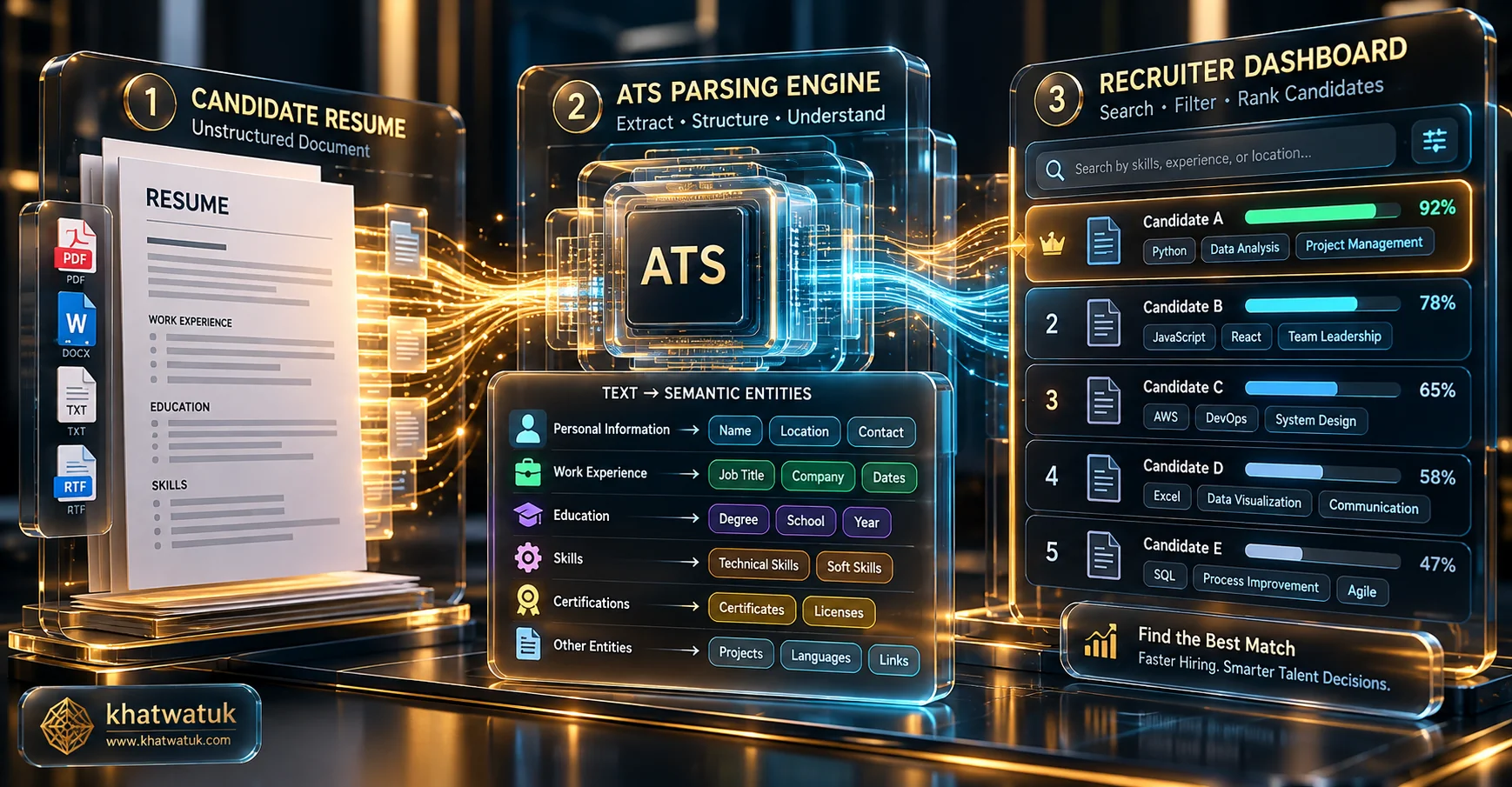
How ATS Algorithms Compare Resumes to Job Descriptions Behind the Scenes
To optimize your resume effectively, you must understand how Applicant Tracking Systems evaluate documents. Far from being mysterious black boxes, modern ATS platforms function as structured search databases that parse, organize, and index candidate information for recruitment teams.
When your resume is uploaded to a platform like Workday or Taleo, a document parser extracts the raw text while stripping away styling elements. The software isolates core candidate attributes, such as contact information, job titles, educational history, and professional competencies into standardized digital fields.
Once parsed, the ATS compares your profile text against the employer's job requisition using Natural Language Processing (NLP). Crucially, the algorithm prioritizes hard skills over soft skills. Specific technical competencies, certifications, and measurable industry tools carry heavy search weight, whereas generic personality traits receive minimal ranking consideration.
For a deeper analysis of foundational builder mechanics and layout compatibility across legacy corporate parsers, explore our comprehensive guide on the best AI resume builder in 2026.
Step-by-Step Guide: How to Compare Your Resume to a Job Description
Executing a thorough resume comparison requires a structured, three-step methodology. Whether you perform this audit manually using split-screen documents or leverage automated AI software, following this sequential framework ensures comprehensive keyword coverage without compromising your professional credibility.
Step 1: Dissecting the Job Description (The Highlighter & Extraction Method)
Begin by copying the complete target job posting into a blank document. Read through the text carefully to separate mandatory core qualifications from optional preferences. Employers typically list non-negotiable requirements near the top of the qualifications section, often repeating critical competencies multiple times.
Highlight all explicit technical tools, programming languages, regulatory frameworks, and job titles in green. Next, highlight secondary soft skills in yellow. This visual breakdown immediately isolates the hard keywords that recruiters will use as search filters within their candidate database.
If you are evaluating dedicated scanning platforms versus job trackers, our detailed comparison of Jobscan vs Teal illustrates how automated scanners extract and categorize these exact skill clusters.
Step 2: Mapping Hard Skills and Calculating Keyword Overlap
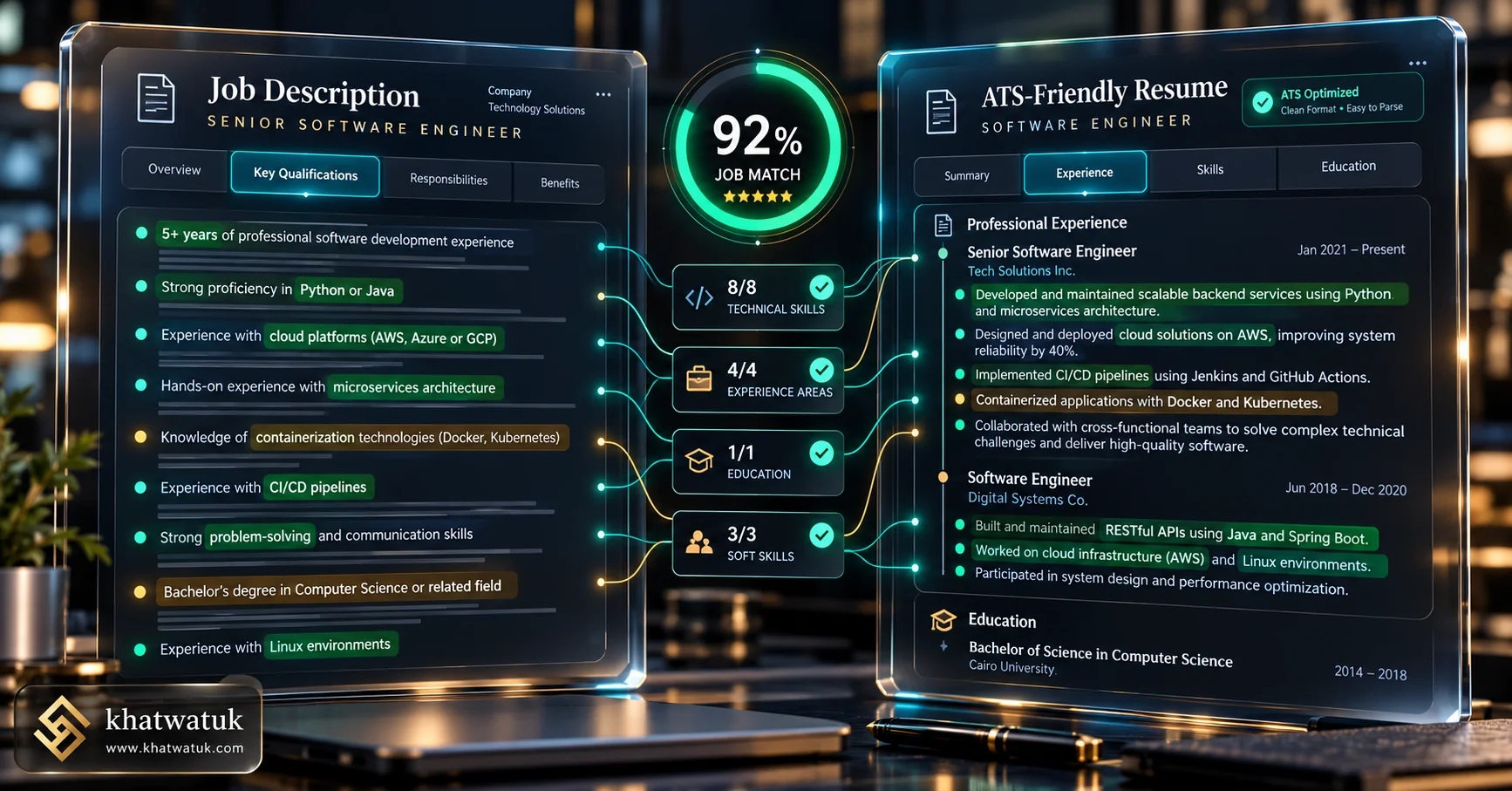
Open your existing resume alongside the highlighted job description in a side-by-side split screen. Conduct an honest line-by-line inventory across your professional summary, skills section, and employment history to verify where each highlighted keyword appears in your document.
Group your findings into three distinct categories: fully demonstrated skills, partially demonstrated experience requiring clearer terminology, and missing qualifications. Pay close attention to exact keyword phrasing, as some older ATS parsers do not recognize acronyms interchangeably with full industry terms.
To explore dedicated software platforms engineered specifically for automated side-by-side keyword matching and match score analytics, consult our practical benchmark of AI resume job description match tools tested across corporate screening environments.
Step 3: Rewriting Achievement Bullets with the STAR Framework
Never paste missing keywords into an isolated, contextless list at the bottom of your resume. Instead, integrate missing terms naturally into your work history using the STAR formula (Situation, Task, Action, Result) to validate your practical expertise.
For example, rather than simply listing 'Project Management', write: 'Managed cross-functional product roadmap using Agile sprints, reducing project delivery delays by 22% across 6 enterprise deployments.' This contextualizes the keyword for ATS algorithms while proving measurable business impact to hiring managers.
To see how dedicated keyword targeting compares with design-oriented tools, review our breakdown of Rezi vs Kickresume, which examines how different builders handle contextual accomplishment writing.
The Match Score Sweet Spot: Why a 100% Match Score Is Dangerous
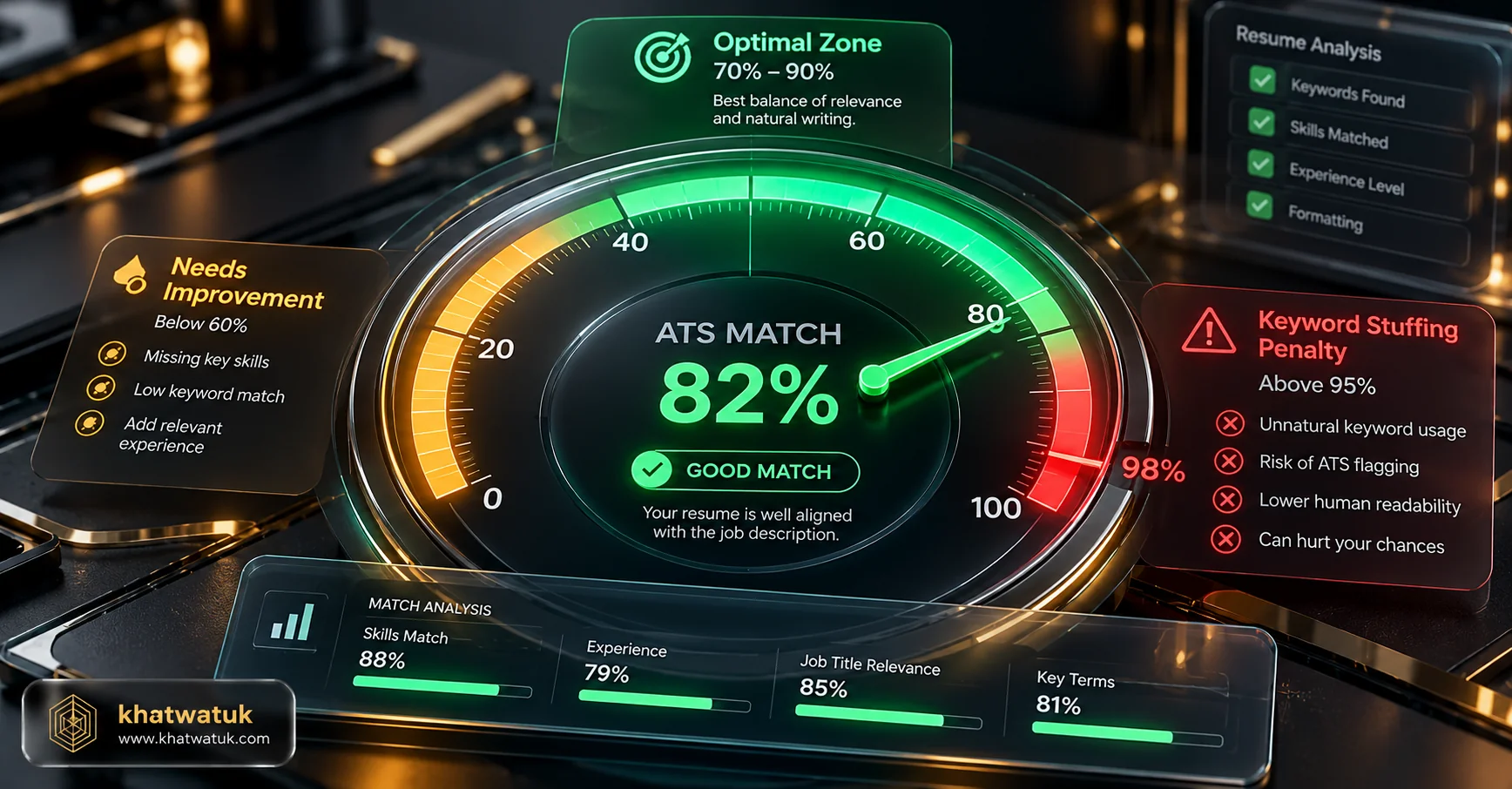
Many job applicants mistakenly believe that achieving a 95% to 100% match score on an automated ATS scanner is the ultimate goal. In reality, attempting to match every single word in a job posting often damages your candidacy and triggers negative screening reactions.
When a resume hits an unnatural 98% or 100% match rate, it almost always suffers from awkward keyword repetition and artificial sentence phrasing. Human recruiters spend an average of six seconds scanning incoming resumes; if your text reads like a robotic regurgitation of the job description, it will be discarded immediately.
The optimal target is the 75% to 85% match score sweet spot. This threshold provides sufficient keyword density to clear algorithmic search filters while leaving ample room for authentic, individualized career accomplishments that demonstrate your unique professional voice.
Archetype Comparison: Choosing the Best Approach for Your Career Stage
Different career profiles require tailored comparison strategies. Understanding your specific application constraints allows you to choose the most cost-effective and operationally efficient tailoring workflow for your current job hunt.
Consider these proven archetypes when deciding how to structure your resume-to-job comparison workflow:
- Choose Jobscan if you are applying to highly competitive enterprise roles at Fortune 500 corporations that rely heavily on complex Workday or Taleo algorithmic screening tiers.
- Choose Teal if you are managing an active, multi-channel job search across dozens of openings and want an integrated browser extension to track applications alongside keyword matching.
- Choose Rezi if you want guaranteed ATS-compliant plain-text formatting, lifetime software ownership, and immediate AI keyword targeting built directly into the document editor.
- Choose the Manual Split-Screen Method if you are on a strict budget, applying to smaller companies with human-led hiring processes, or seeking to preserve complete creative control over your narrative.
To discover how all-in-one platforms stack up in direct head-to-head testing, explore our detailed analysis of Teal vs Rezi to see which tool best balances keyword optimization with document creation.
Edge Cases and Common Tailoring Mistakes to Avoid
Even well-intentioned candidates frequently fall into common technical traps when comparing and tailoring their resumes. Avoiding these critical edge cases ensures your application maintains both algorithmic discoverability and recruiter trust.
One pervasive myth is the 'white font trick'—hiding invisible job description text in white font within headers or footers. Modern ATS parsers strip all color formatting and render hidden text as unformatted strings. When recruiters see a suspicious wall of repeated keywords, your application is automatically flagged and rejected.
Another major hazard involves multi-column tables, visual text boxes, and graphical icons. Complex layouts frequently cause ATS document parsers to scramble text reading order, blending your job titles with company descriptions and corrupting your parsed profile.
Finally, remember that resume tailoring should be paired with tailored cover letters. Review our guide on the best AI cover letter generator to align your full application package with the employer's expectations.
Frequently Asked Questions (FAQ)
Below are verified, authoritative answers to the most common questions job seekers ask when comparing resumes to target job postings.
How do I compare my resume to a job description manually?
To compare manually, paste the job posting into a document and highlight mandatory technical skills in green and secondary skills in yellow. Next, open your resume in a split-screen window and conduct a line-by-line review to verify where those keywords appear. Finally, update your professional summary and experience bullets to incorporate missing terms using quantified achievement metrics.
What is considered a good or safe ATS resume match score?
An optimal ATS match score falls between 75% and 85%. This range guarantees that your resume contains sufficient core keyword density to satisfy automated search algorithms without sounding repetitive, forced, or robotic when reviewed by human recruiters.
Can Applicant Tracking Systems reject resumes automatically for missing keywords?
Most ATS platforms do not issue automated rejections solely based on keyword percentages. Instead, the software assigns relevance scores and ranks candidates. If your match score is low, your profile simply lands at the bottom of the recruiter's search results, making an interview review unlikely.
What is the difference between hard skills and soft skills in resume matching?
Hard skills represent specific technical abilities, certifications, software tools, and domain proficiencies (such as Python, financial modeling, or HIPAA compliance) that can be objectively tested. Soft skills represent interpersonal traits (such as leadership or communication). ATS algorithms weigh hard skills far more heavily during initial screening.
How can I compare my resume to a job description for free?
You can compare for free by using the manual highlighter split-screen method, running free word cloud generators to identify high-frequency keywords, or taking advantage of free monthly scan allowances on platforms like Jobscan (5 free scans monthly) and SkillSyncer.
Can I use ChatGPT to compare my resume to a job description safely?
Yes, you can safely use ChatGPT by providing both texts and prompting: 'Analyze this job description and resume. Identify the top 10 missing hard skills and suggest quantified bullet improvements.' However, always review generated suggestions manually to prevent fabricated credentials or unrealistic claims.
What are the biggest mistakes job seekers make when tailoring resumes?
The most severe mistakes include keyword stuffing, using complex multi-column graphic templates that crash document parsers, attempting white font hacks, and claiming qualifications you do not possess, which will quickly unravel during technical interviews.
Does achieving an 85% ATS match score guarantee an interview callback?
No algorithm can guarantee an interview callback. A high ATS match score ensures that your resume successfully reaches the hiring manager's desk. Once opened, your career progression, quantifiable achievements, and clear communication determine whether you receive an interview invitation.
