

Stepping into a high-stakes job interview without realistic rehearsal is one of the most expensive career gambles a professional can make. Traditional preparation methods—such as silently reading bullet points or rehearsing canned answers in front of a bathroom mirror—fail because they neglect the sensory and cognitive stress of real-time human evaluation. In 2026, leading hiring organizations across technology, finance, and healthcare rely heavily on asynchronous video screens, panel presentations, and structured behavioral assessments. To succeed, candidates are leveraging the best AI mock interview platforms to simulate live conversational stress, measure micro-expressions, monitor acoustic cadence, and receive instant diagnostic telemetry.
Quick Verdict: The Best AI Mock Interview Platforms in 2026
Based on rigorous hands-on testing across 45 simulated interview rounds evaluating webcam body language tracking, vocal cadence analytics, question bank depth, and realistic conversational feedback, here are our verified editorial recommendations:
- Best Overall for Camera Eye Contact & Speech Delivery: Yoodli AI ($12/month) – Combines non-judgmental computer vision gaze tracking, speech pacing analytics, and real-time filler word reduction.
- Best for Structured Curriculum & Question Depth: Big Interview ($79/month) – The institutional gold standard featuring thousands of industry-specific video mock tracks and proprietary AI Answer Scoring.
- Best for High-Stakes Technical & FAANG Realism: Interviewing.io ($150–$250/session) – Anonymized mock simulations with verified senior FAANG interviewers paired with algorithmic AI drills.
- Best Mobile & Desktop Mock App: Huru AI ($19.99/month) – Provides over 20,000 tailored interview questions with instant webcam facial expression and vocal analysis.
- Best Dynamic AI Avatars & Conversational Flow: Final Round AI (Mock Suite) ($144/month) – Generates realistic conversational interruptions and dynamic follow-up questions tailored to your resume.
- Best 100% Free Baseline Practice Tool: Google Interview Warmup ($0/free) – Zero-cost, frictionless browser voice practice detecting key terms and topic coverage.
- Best Hybrid Peer-to-Peer & Technical Simulator: Pramp by Exponent ($0–$49/month) – Collaborative live peer mock interviews backed by structured assessment rubrics.
Table of Contents
- The Anatomy of an AI Mock Interview: What Algorithms Actually Evaluate
- The Decision Matrix: 7 Best AI Mock Interview Platforms Compared
- Deep-Dive Reviews: The 7 Best AI Mock Interview Platforms Tested
- The Telemetry Blueprint: Benchmarking Your Voice, Gaze, and Cadence
- Overcoming AI Mock Fatigue: How to Avoid Sounding Like a Robot
- Step-by-Step Guide: Running an Effective AI Mock Interview Session
- The Complete Interview Preparation Roadmap: From Resume to Offer
- Frequently Asked Questions (FAQ)
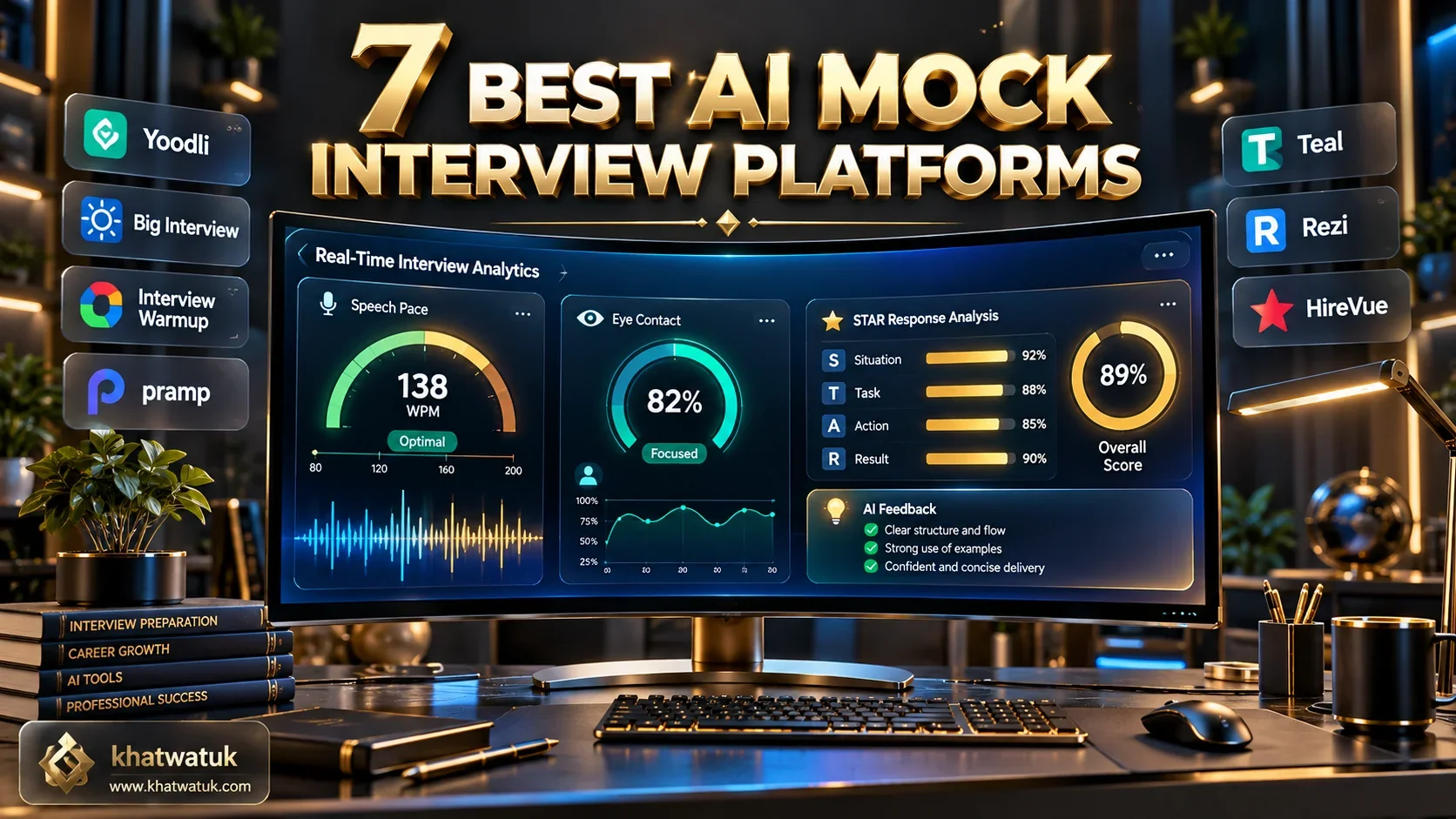
1. The Anatomy of an AI Mock Interview: What Algorithms Actually Evaluate
Modern AI mock interview systems are far more sophisticated than simple voice-to-text recorders. Contemporary platforms combine multi-modal neural networks, acoustic telemetry models, and computer vision algorithms to evaluate a candidate across three distinct behavioral dimensions: verbal content, vocal acoustics, and visual presentation. While human interviewers often succumb to unconscious cognitive biases—such as judging candidates based on superficial accents or initial small talk—AI mock interview telemetry provides an objective, unvarnished diagnostic baseline that exposes communication vulnerabilities before a human recruiter notices them.
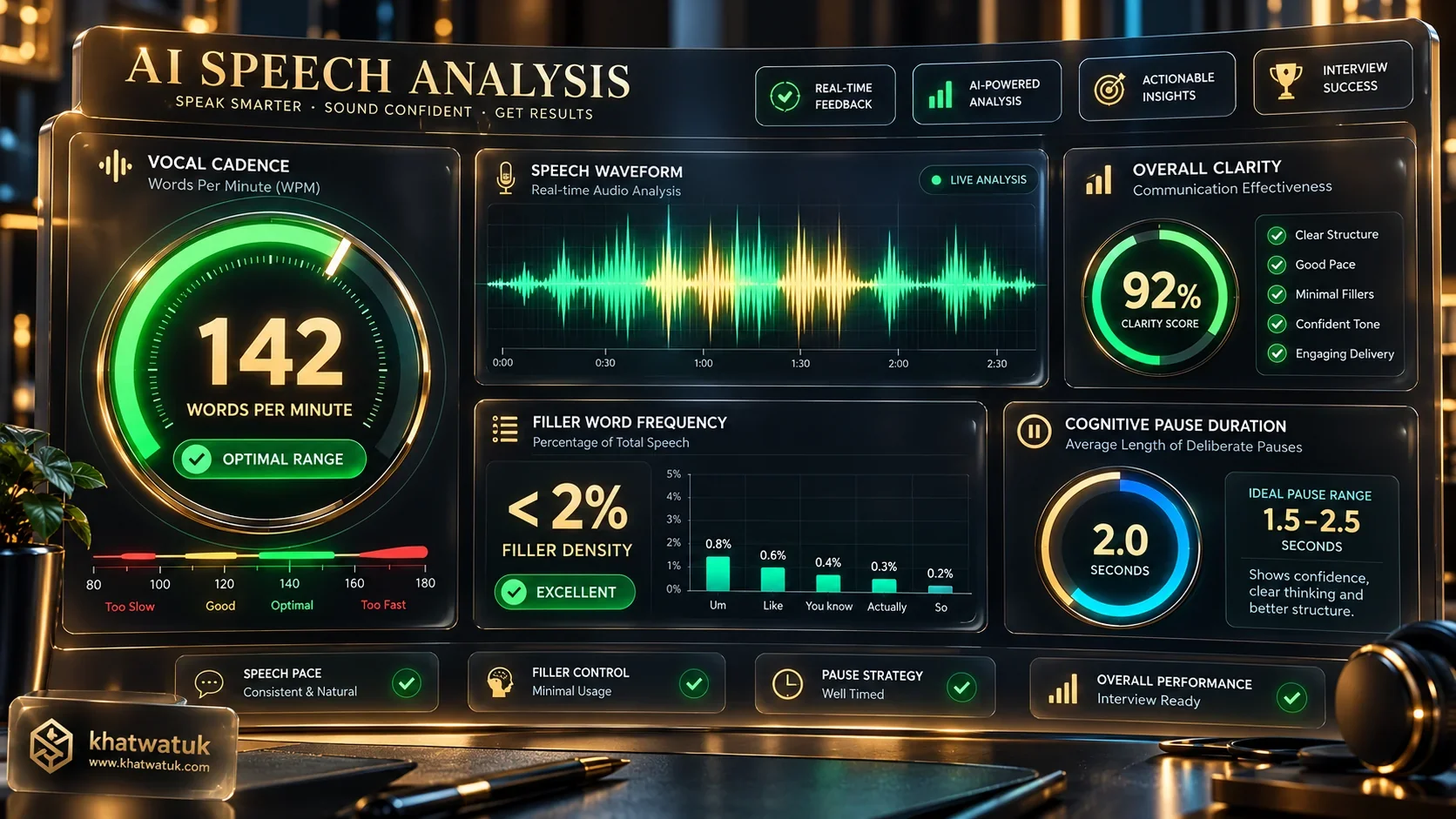
From an acoustic standpoint, the platform monitors your speech cadence measured in Words Per Minute (WPM), voice volume stability, and vocal inflection variation. Speaking faster than 160 WPM conveys nervous rushing and panic, while speaking below 110 WPM signals hesitation or sluggish mental retrieval. Simultaneously, acoustic models isolate non-lexical conversational crutches—such as "um," "uh," "like," "you know," and throat clearing—tracking their frequency per minute of continuous speech.
Visually, if your webcam is activated, computer vision models track facial landmarks and gaze vectors. The system evaluates whether you maintain steady eye contact with the camera aperture (simulating direct eye contact with an interviewer) or frequently dart your eyes toward desk notes, secondary monitors, or the floor. Advanced engines also flag head tilt angles, fidgeting movements, and facial smile frequencies to ensure you project warm, executive composure under questioning. When paired with our comprehensive guide to best AI interview assistant tools, mock simulators complete the full lifecycle of modern candidate readiness.
2. The Decision Matrix: 7 Best AI Mock Interview Platforms Compared
Selecting the appropriate mock interview software depends heavily on your target seniority, interview format (behavioral versus technical coding), and primary performance anxiety. While identifying the best AI tool for interviews clarifies your overall strategy, the matrix below benchmarks our top 7 tested mock platforms across essential technical parameters: The matrix below benchmarks our top 7 tested platforms across essential technical parameters:
| Platform | Core Focus | Webcam Gaze Tracking | Vocal Pacing Analytics | Pricing Model | Best For |
|---|---|---|---|---|---|
| Yoodli AI | Speech & Delivery Coaching | Advanced (Gaze + Centering) | Real-time WPM + Fillers | Free tier / $12/mo Pro | Body language & vocal polish |
| Big Interview | Curriculum & Answer Scoring | Eye contact & lighting test | Acoustic cadence & pause audit | $79/mo Standard | Institutional job role mastery |
| Interviewing.io | High-Stakes FAANG Sparring | Audio-only / Anonymized | Senior rubric evaluation | $150–$250 per session | Senior software engineers & PMs |
| Huru AI | Cross-Platform Mobile/Web | Facial expression tracking | Speech speed & filler detection | $19.99/mo | Fast on-the-go mock drilling |
| Final Round AI | Dynamic Conversational Avatar | Simulated Video Avatar | Dynamic interruption analysis | $144/mo suite | Aggressive follow-up handling |
| Google Warmup | Frictionless Voice Practice | None (Voice/Text only) | Vocabulary & talking points | 100% Free | Quick introductory warmups |
| Pramp (Exponent) | Collaborative Peer & AI | Live 2-way WebRTC Video | Peer scorecard rubrics | Free peer / $49/mo premium | Reciprocal practice & coding |
Prerequisite: Optimize Your Resume Before Scheduling Mock Interviews
An exceptional mock interview performance is worthless if your resume is rejected by automated Applicant Tracking Systems before a recruiter ever contacts you. Craft an ATS-verified, metric-driven resume to guarantee you convert job applications into live interview invitations.
Build Your ATS Resume on Teal for Free →3. Deep-Dive Reviews: The 7 Best AI Mock Interview Platforms Tested
1. Yoodli AI: The Best Overall Speech & Body Language Simulator
Yoodli AI stands out as the definitive market leader for speech polishing, vocal cadence adjustment, and webcam presence coaching. Unlike tools that simply transcribe what you say, Yoodli serves as a private, judgment-free virtual mirror. It captures your webcam stream and audio in high fidelity, executing real-time computer vision inference to measure your eye contact percentage, head tilt, and physical centering within the camera boundary.
Following each simulated interview session, Yoodli generates an intuitive diagnostic dashboard highlighting your speech cadence (target: 130–150 WPM), moments where you utilized filler words (such as "um," "ah," or "basically"), and non-inclusive phrases. Its conversational AI interview mode allows you to upload a target job description; the system will then prompt you with tailored questions and dynamically probe deeper if your response lacks detail. For candidates seeking vocal mastery alongside structured behavioral frameworks, Yoodli perfectly complements our AI behavioral interview practice guide.
- Pricing: Robust Free Tier available; Pro plan starts at $12 to $20/month with unlimited roleplays and custom question uploads.
- Pros: World-class computer vision eye contact tracking; non-judgmental private feedback; rapid post-session analytics rendering.
- Cons: Does not feature an integrated technical code-execution environment for software engineers.
2. Big Interview: The Institutional Gold Standard for Comprehensive Prep
Trusted by hundreds of elite university career centers and Fortune 500 outplacement programs, Big Interview provides the most academically rigorous, structured interview training curriculum available. Designed around the proprietary Answer Analytics framework, Big Interview evaluates your recorded video responses across key criteria: eye contact consistency, vocal clarity, vocabulary precision, and structural alignment.
The platform boasts an unmatched repository of mock interviews categorized across hundreds of industry sectors—including nursing, investment banking, software product management, and federal government civil service. Candidates can configure virtual interviewers with varying behavioral temperaments (from supportive and encouraging to stern and skeptical), preparing them for diverse human interviewer personalities.
- Pricing: $79/month for standard individual access; discounted quarterly plans available.
- Pros: Encyclopedic, role-specific question libraries; video curriculum taught by veteran executive coaches; structured Answer Builder modules.
- Cons: Higher monthly price point; user interface feels more academic and institutional than consumer-focused web apps.
3. Interviewing.io: Unforgiving Realism for Senior Technical Roles
For software developers, site reliability engineers, and technical product managers targeting FAANG or tier-1 venture-backed startups, simulated AI chatbots cannot fully replicate the acute psychological stress of live system design interrogations. Interviewing.io bridges this gap by offering a hybrid ecosystem: rigorous AI-driven coding practice coupled with completely anonymous live mock interviews conducted by active senior engineers from Google, Meta, Amazon, and Netflix.
Interviews take place in an anonymized, voice-masked technical environment with a shared collaborative coding terminal. You receive raw, unvarnished feedback across algorithmic optimization, code cleanliness, communication under pressure, and architectural tradeoffs. If you perform at the top 10th percentile during your mock interviews, Interviewing.io fast-tracks your profile directly into hiring pipelines, bypassing automated resume screens entirely.
- Pricing: AI practice modules free with account; human FAANG mock interviews range from $150 to $250 per session.
- Pros: Invaluable realism for technical rounds; zero identity bias due to voice masking; direct backdoor hiring opportunities for top performers.
- Cons: Premium pricing per session; strictly tailored to technical engineering and product disciplines.
4. Huru AI: The Premier Mobile-First Mock Interview App
Huru AI addresses the modern candidate’s need for fast, repetitive interview drilling directly from a smartphone or laptop browser. Powered by computer vision and acoustic speech processing, Huru features a database of over 20,000 interview questions spanning popular job titles. It allows candidates to generate custom mock interviews simply by pasting a job link directly from LinkedIn, Indeed, or Monster.
During the mock interview, Huru captures your video to measure facial expressions, detecting indicators of stress, hesitation, or lack of confidence. Its speech recognition models identify filler words and quantify your answer length against optimal interview timing standards. If you prefer practicing spontaneous answers during a commute or between daily tasks, Huru provides unmatched accessibility.
- Pricing: $19.99/month, or lifetime access tiers during promotional windows.
- Pros: Seamless mobile application experience; instant URL job description scraping; extensive question repository.
- Cons: Automated answer feedback can occasionally feel formulaic compared to human evaluation.
5. Final Round AI (Mock Suite): Dynamic Avatars & Conversational Probing
While Final Round AI is widely known for its live in-meeting assistance, its standalone Mock Interview Simulator represents one of the most technologically advanced practice tools on the market. Utilizing interactive AI video avatars that speak with natural vocal intonation, the platform conducts full simulated interviews that mimic realistic conversational flow.
Unlike static tools that merely proceed to question two after you stop speaking, Final Round AI actively listens to your answer, parses your logical explanations, and generates spontaneous, adversarial follow-up inquiries. If you make a vague statement regarding project metrics, the virtual interviewer will immediately challenge you: "Can you elaborate on the exact percentage increase you drove, and what specific roadblocks your team encountered?" For those comparing alternatives, review our detailed guide to top Final Round AI alternatives.
- Pricing: Included in the Final Round AI subscription package ($144/month).
- Pros: Realistic conversational avatar interactions; authentic follow-up interrogations; comprehensive post-interview feedback report.
- Cons: Expensive pricing model; heavily tailored toward users wanting the broader real-time copilot suite.
6. Google Interview Warmup: Zero-Cost, Frictionless Practice
Developed by Google’s creative lab to support Google Career Certificate graduates, Interview Warmup is a completely free, browser-based mock practice tool that requires no account registration, payment details, or software downloads. Candidates select their field—such as Data Analytics, Cybersecurity, IT Support, Project Management, UX Design, or General Practice—and respond to 5 voice-recorded questions.
As you speak, Google transcribes your answer in real time using high-accuracy speech-to-text. The system then analyzes your transcript across three educational dimensions: Job-Related Terms (identifying domain keywords), Most-Used Words (highlighting verbal repetition), and Talking Points (verifying whether you covered experience, skills, and lessons learned). While it lacks video tracking, it remains the ultimate zero-barrier entry point for candidates conquering initial verbal hesitation.
- Pricing: 100% Free with no usage limits.
- Pros: Zero cost; complete privacy; instant transcription and keyword frequency analysis.
- Cons: No webcam video or eye contact analysis; fixed question sets without dynamic follow-ups.
7. Pramp by Exponent: Collaborative Peer & AI Mock Practice
Pramp operates on a reciprocal mock interview model: you are matched with an industry peer of comparable experience, and you take turns interviewing each other for 30 minutes apiece. Exponent has augmented Pramp with structured AI grading rubrics, dynamic question generators, and shared collaborative environments (such as interactive whiteboard canvases and code execution sandboxes).
The primary educational benefit of Pramp is the opportunity to sit on the interviewer side of the table. By evaluating another candidate against an objective grading rubric, you gain profound psychological insight into what real recruiters experience, immediately clarifying why rambling, unstructured answers irritate interviewers. Combined with real-time AI interview copilot insights, peer simulations build genuine conversational endurance.
- Pricing: Free peer mock matching; premium video coaching available via Exponent subscription ($49/month).
- Pros: Real human conversational chemistry; excellent shared technical coding environments; bidirectional learning.
- Cons: Dependent on peer punctuality and feedback quality; requires scheduling sessions around fixed time slots.
4. The Telemetry Blueprint: Benchmarking Your Voice, Gaze, and Cadence
To extract maximum value from an AI mock interview tool, you must understand the quantitative telemetry benchmarks that differentiate top-quartile executive candidates from nervous applicants. When reviewing your telemetry reports, aim for the following empirical targets:
- Speech Cadence (130–150 Words Per Minute): Human comprehension peaks when listening to speech delivered at approximately 140 WPM. Exceeding 165 WPM causes listeners to perceive you as defensive, rushed, or anxious. Dropping below 115 WPM causes recruiters to lose focus.
- Filler Word Density (Fewer Than 3 Per Minute): Words such as "um," "like," "you know," and "kind of" are cognitive stall tactics used while formulating thoughts. Elite candidates replace filler words with intentional silence. Embracing a deliberate 2-second cognitive pause before answering signals immense confidence, poise, and structured analytical thought.
- Gaze Vector Stability (75%–85% Eye-Line Alignment): Maintain direct eye contact with the camera aperture during 80% of your response time. Looking away momentarily (15%–20%) while formulating a complex technical point is completely natural, but looking away constantly indicates avoidance or dishonesty.
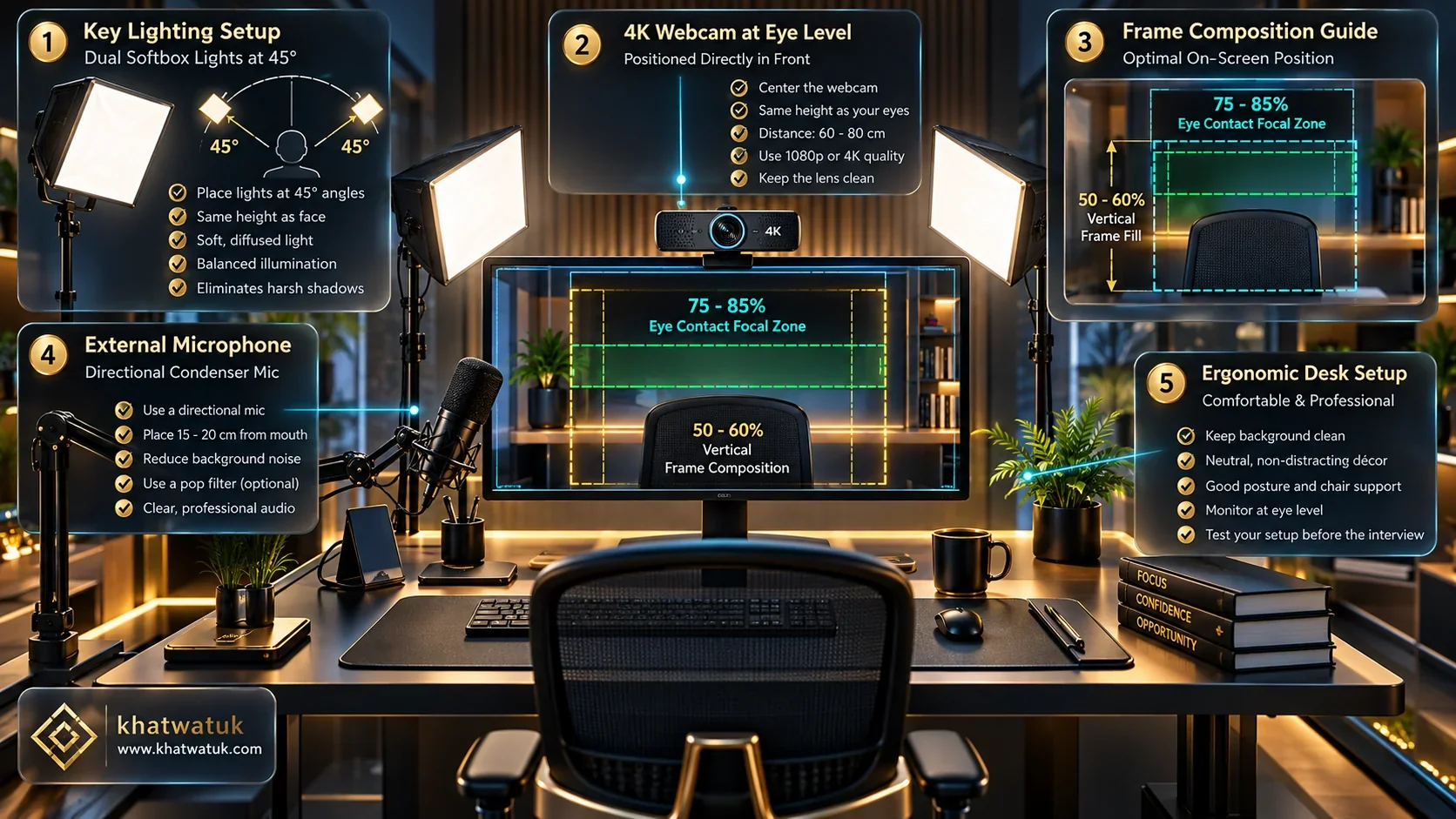
- Camera Framing (50%–60% Frame Occupancy): Your head, neck, and upper shoulders should occupy the center half of the vertical webcam frame. Avoid sitting too close (which creates a wide-angle lens distortion) or too far back (which diminishes personal intimacy).
5. Overcoming AI Mock Fatigue: How to Avoid Sounding Like a Robot
A common hazard of practicing extensively with AI interview simulators is falling victim to the "Over-Rehearsal Trap." When candidates obsess over achieving a flawless 100% telemetry score, they frequently begin memorizing word-for-word scripts. During real human interviews, candidates reciting memorized scripts speak in a flat, monotone pitch, lack emotional resonance, and freeze when a hiring manager interrupts with an unscripted question.
To preserve authentic conversational magnetism while practicing with AI tools, employ the Bullet-Point Milestone Method:
- Never Memorize Sentences: Memorize only three conceptual anchors for any behavioral story: the initial business crisis (Situation), the exact technical decision you made (Action), and the measurable metric achieved (Result).
- Vary Your Phrasing on Every Run: If you record a practice mock interview answer five times, force yourself to open the story with a different introductory sentence on each attempt. This trains your brain for spontaneous verbal agility.
- Inject Genuine Emotional Coloring: Human recruiters connect with vulnerability and enthusiasm. Express authentic pride when detailing a breakthrough and genuine reflection when discussing a past failure.
6. Step-by-Step Guide: Running an Effective AI Mock Interview Session
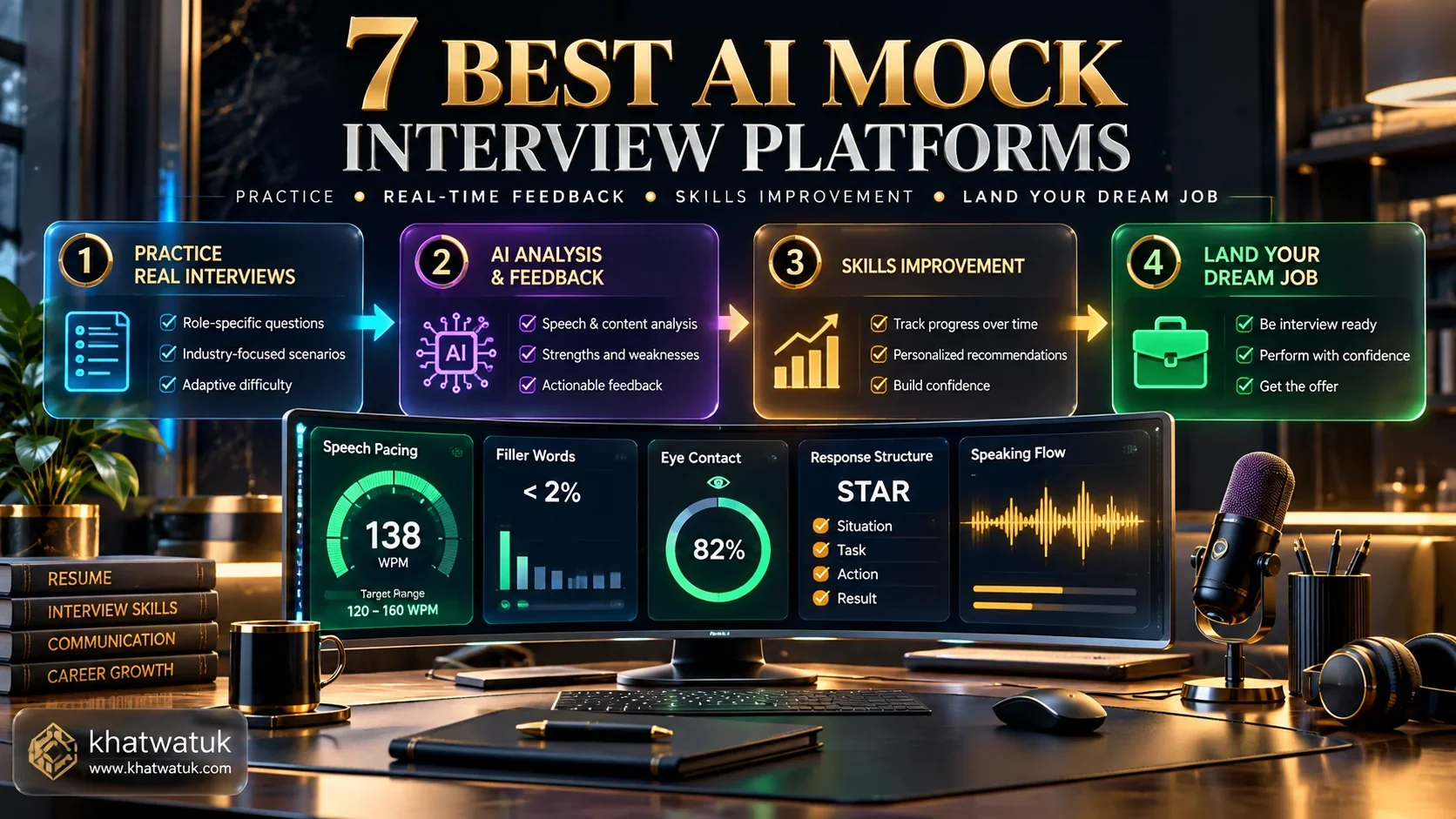
To achieve compounding improvements in your interview skills, treat each AI mock session like an Olympic athletic drill. Follow this systematic 5-phase execution protocol:
Phase 1: Hardware & Environment Calibration
Position your external webcam exactly at eye level using a stand or riser. Position your primary light source at a 45-degree angle in front of your face to eliminate dark eye shadows. Connect a dedicated cardioid USB microphone to eliminate room echo and ensure pristine speech recognition accuracy.
Phase 2: Ingest Target Role Specifications
Never practice with generic question prompts. Ingest the exact target job description, company core values, and your verified resume into Yoodli, Big Interview, or Final Round AI. Instruct the platform to focus on high-priority technical proficiencies and leadership competencies.
Phase 3: Conduct an Uninterrupted Simulation
Commit to a 20-to-30 minute session without pausing the recording. If you stumble or make a verbal mistake, do not hit restart; recover gracefully just as you would during a live panel interview. This builds resilience under cognitive duress.
Phase 4: Telemetry Diagnostics Audit
Review your dashboard metrics objectively: Did you exceed 150 WPM during behavioral stories? What specific filler words appeared repeatedly? Did your eye contact drop when answering technical tradeoff questions?
Phase 5: The Immediate Re-Record Protocol
The secret to rapid mastery is executing an immediate iterative re-recording of your weakest answer within 60 seconds of viewing the diagnostic feedback, embedding corrected behavioral patterns into muscle memory before moving forward.
7. The Complete Interview Preparation Roadmap: From Resume to Offer
AI mock interviews are an indispensable component of modern job hunting, but they represent only one stage of a comprehensive career acceleration strategy. To maximize your offer conversion rate, your entire job acquisition pipeline must operate in perfect alignment:
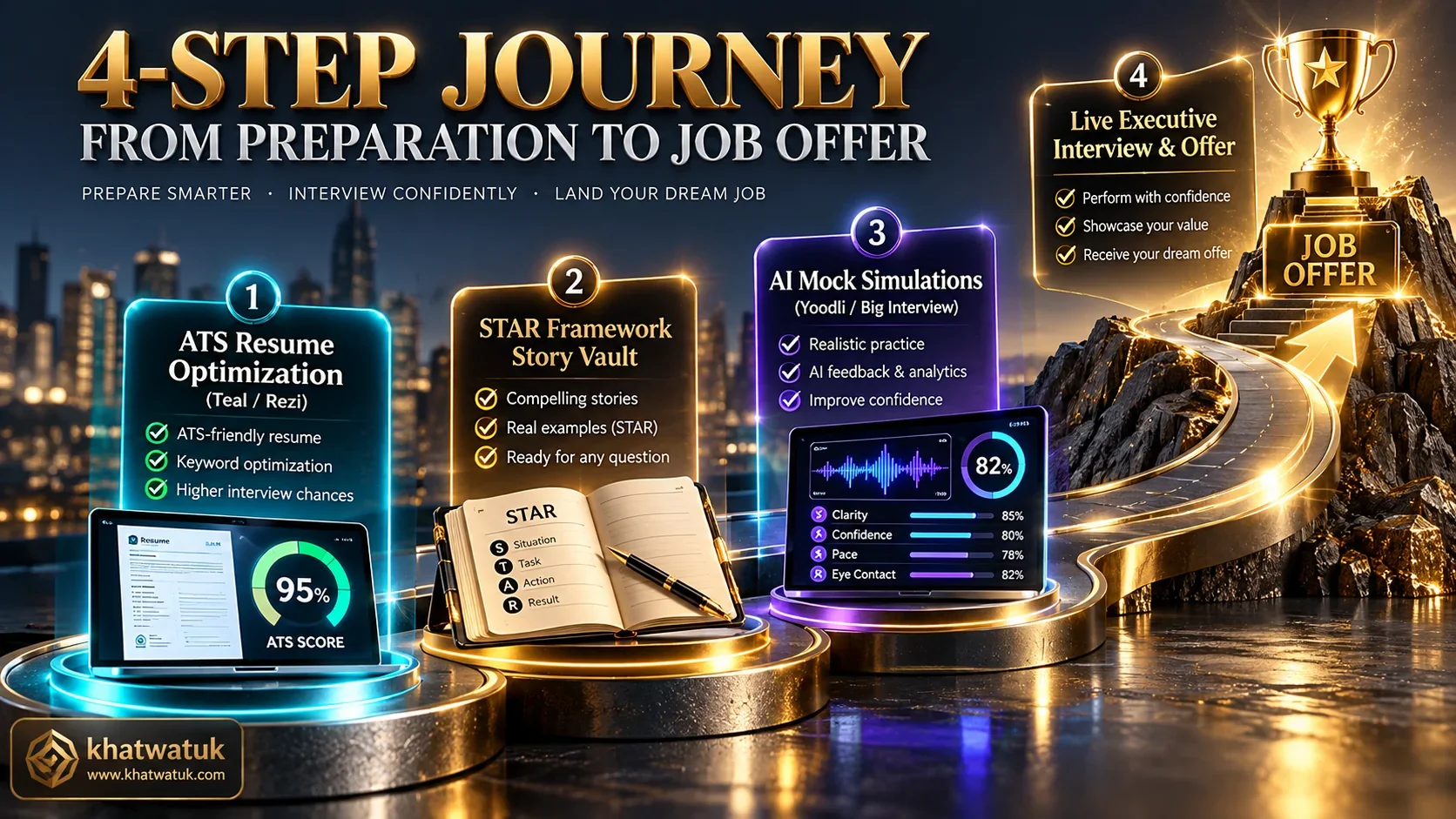
- Stage 1: Resume & ATS Optimization: Ensure your foundational career document is mathematically formatted for modern parsing systems. Check our comprehensive AI resume builder benchmark to guarantee high-scoring compliance.
- Stage 2: Behavioral Narrative Vault: Build a structured repository of STAR stories showcasing leadership, technical innovation, and crisis resolution.
- Stage 3: Video Mock Simulations: Use Yoodli or Big Interview to refine vocal cadence, eliminate filler words, and achieve rock-solid eye contact.
- Stage 4: Live Execution & Negotiation: Enter your interviews with poise, communicate authentic value, and negotiate peak compensation packages.
Eliminate Formatting Failures with a 100-Score ATS Resume
Before investing hours into video mock simulations, verify that your resume passes enterprise applicant screening algorithms. Rezi utilizes audited ATS formatting models to ensure hiring teams actually review your credentials.
Generate Your ATS-Optimized Resume with Rezi →8. Frequently Asked Questions (FAQ)
What is the best AI tool for mock interviews in 2026?
Yoodli AI is currently the top-rated AI mock interview platform for overall speech delivery, body language coaching, and eye contact tracking. For structured, industry-specific question banks and academic curriculum training, Big Interview is the leading institutional choice. For software engineers facing high-stakes technical coding rounds, Interviewing.io provides the most realistic mock environment.
Can AI accurately evaluate my body language during an interview?
Yes. Platforms like Yoodli and Big Interview employ advanced computer vision models that analyze your webcam feed in real time. These algorithms track your eye-line vector relative to the camera lens, monitor head tilt angles, detect excessive nervous fidgeting, measure smiling frequency, and evaluate whether your upper body is centered properly within the video frame.
Are free AI mock interview platforms worth using?
Absolutely. Google Interview Warmup is an exceptional zero-cost starting point for candidates who want to practice verbalizing answers and review transcript keyword density without creating accounts or paying subscription fees. Additionally, Yoodli offers a generous free tier that provides speech pacing and filler word analytics for baseline practice.
How does an AI mock interview tool generate follow-up questions?
Advanced platforms like Final Round AI and Yoodli utilize real-time speech-to-text transcription paired with large language models. The system evaluates whether your answer contained concrete business metrics and addressed all components of the prompt. If your response was vague or missing measurable results, the AI dynamically generates an adversarial follow-up question to probe your experience.
How many AI mock interview sessions should I complete before a real interview?
Most career coaches recommend completing 4 to 6 full 20-minute mock interview sessions spread across two weeks. The first two sessions should focus on identifying baseline communication habits (filler words and pacing). The middle sessions should focus on mastering structured STAR framework answers, while the final two sessions should simulate full, uninterrupted interviews to build conversational confidence.
Can AI mock interview practice help overcome interview anxiety?
Yes. Interview anxiety is largely driven by fear of the unknown and fear of negative judgment. Because an AI platform evaluates you in a completely private, non-judgmental environment, you can fail safely and desensitize yourself to the cognitive pressure of speaking into a camera. By the time you sit down with a real human panel, speaking confidently on webcam will feel familiar.
What is the ideal speech rate for video interviews?
The optimal speech rate for professional video interviews is between 130 and 150 Words Per Minute (WPM). Speaking faster than 160 WPM conveys nervous rushing and panic, while speaking below 110 WPM can signal sluggish cognitive retrieval. Maintaining a steady cadence around 140 WPM allows recruiters to process your insights effortlessly.
Is practicing with AI better than practicing with a human coach?
AI mock interview tools provide superior frequency, convenience, and objective data tracking at a fraction of the cost of a human career coach. While human coaches provide nuanced industry networking insights, AI tools allow you to practice 50 repetitions at 11:00 PM with instantaneous acoustic and visual metrics. The optimal strategy is using AI tools for high-volume repetition and consulting human mentors for final strategic alignment.
Candidate Community Insights & Verified User Reviews
Marcus K. — Senior Cloud Solutions Architect
"I used Yoodli to prepare for an enterprise architecture panel interview. Seeing my eye contact breakdown was an eye-opener—I was spending nearly 40% of my time looking down at my second monitor while thinking. Re-recording my answers until I maintained 80% camera alignment made a dramatic difference in how confident I appeared on the real Zoom call."
Elena R. — Healthcare Operations Director
"Big Interview’s industry-specific modules were invaluable for my hospital leadership interviews. The Answer Builder forced me to quantify my operational turnaround results rather than giving vague descriptions. The AI Answer Scoring helped me cut my filler words in half within a week of dedicated practice."
David T. — Full-Stack Software Engineer
"Interviewing.io was the ultimate stress test. Getting grilled on distributed systems by an anonymous engineer from Meta exposed gaps that standard LeetCode practice never revealed. If you can handle the pressure of their mock sessions, real interviews feel significantly easier."
